

Foot massage in Ho Chi Minh City can be an easy way to pause after standing at work, walking through the city or traveling. The phrase does not tell you exactly which areas or techniques are included, so ask whether the session covers feet only, ankles or lower legs, what products are used and how pressure can be changed. A relaxation appointment is not a medical diagnosis or a guaranteed treatment for foot pain. This guide explains how to compare options, arrange an in-home visit and recognize when a symptom should be checked by a healthcare professional.

Quick answer: Confirm the scope, duration, pressure, hygiene and price before booking. Tell the provider about wounds, skin conditions, recent injury, numbness or circulation concerns, and seek medical advice if symptoms are severe or unexplained.
💡 Tip: Confirm scent and pressure. ⚠️ Stop if the session causes pain or irritation. ✅ Verify the total cost and appointment details. 🔎 Ask for unclear terms in writing.
Foot massage Ho Chi Minh City: What to know
What does a foot massage usually include?
Providers use the term in different ways. A short appointment may focus on the soles and ankles; another may include the calves, a warm foot soak or a combination with full-body relaxation. Oil, lotion, towels and basins are also provider-specific. Ask for a clear description instead of assuming that each detail is included.
Home Spa Massage lists foot and leg care among its targeted services. Ask the booking team whether a dedicated foot massage can be arranged at your specific location and what the current format includes. For general logistics, see the existing Ho Chi Minh City at-home massage guide. If you are staying at a hotel, consult the hotel massage booking guide and confirm property access directly.
Foot massage should not be confused with podiatry, physiotherapy or medical treatment. A provider may offer a relaxing session, but diagnosis of a foot condition belongs with an appropriate healthcare professional.
Is a session right for your situation?
Someone whose feet feel tired after a normal day may enjoy a gentle session. A traveler who has walked more than usual might prefer a short appointment and light pressure. People with a new injury, swelling, reduced sensation, skin infection or persistent pain should pause before booking and seek appropriate medical advice.
Think about the reason for the appointment. If you want relaxation, say so; if you are hoping to treat a health problem, speak to a clinician about whether massage is suitable. Avoid expecting reflexology claims or pressure-point explanations to replace medical assessment. A pleasing experience can still be valuable without being described as disease treatment.
Choose session length and pressure
The right duration depends on the provider’s menu, your schedule and how comfortable you are with touch. Ask whether the quoted time includes setup, whether both feet receive equal attention and whether lower legs are included. Start with gentle or moderate pressure and request adjustments in real time. If you feel sharp pain, tingling or numbness, ask the therapist to stop or change approach.
| Need | Request to make | Detail to confirm |
|---|---|---|
| Relax after walking | Gentle, unhurried foot-focused session | Whether lower legs are included |
| Sensitive soles | Light pressure and check-ins | How to pause or stop easily |
| No oil | Product-free or towel-based approach | Whether that option is available |
| Quick appointment | Short focused session | Hands-on duration versus setup time |
| Hotel appointment | In-room service if permitted | Visitor and reception rules |
No technique should be painful by default. Communicating discomfort is part of the appointment, not a complaint.
Hygiene and products
Before a session, ask whether towels are fresh for each guest and how any basin or reusable equipment is cleaned. If lotion or oil is used, request its name and ingredients when you have a sensitivity. You may decline a product. Do not accept a treatment over broken skin, an active infection or an irritated area.
If you prefer to wash your feet first, do so as part of your usual routine; no special preparation is necessary unless the provider tells you otherwise. Ask whether soaking is included so that you can decide whether it is comfortable and practical. Keep footwear nearby in case the floor or skin is slippery afterward.
Arranging an at-home visit in Ho Chi Minh City
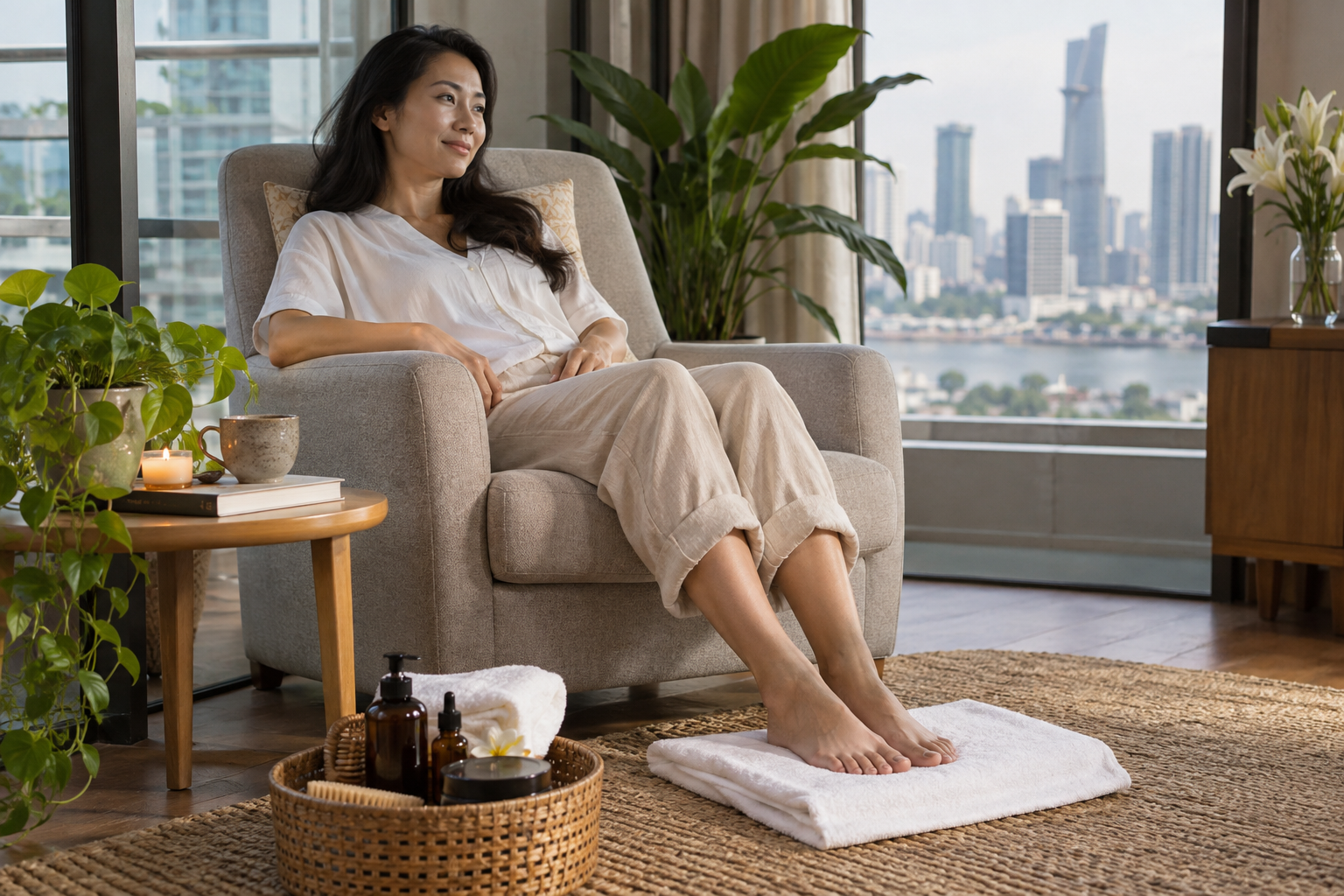
Send the complete address, building name, apartment or unit details when needed, map pin and access instructions. If there is security or reception, explain the visitor process. Keep a phone reachable so the therapist can contact you if traffic or building access creates a delay.
At a hotel or serviced apartment, ask the property whether outside service providers are allowed. Some buildings require guest registration or restrict access to rooms. Confirm the appointment window, what supplies the therapist brings and whether you need to provide a chair or open floor space.
Before you commit, confirm total cost, duration, travel or late-hour fees, cancellation terms and booking status. The site’s Ho Chi Minh City massage price reference may help you understand price factors, but ask for a current quote because a reference price is not a guaranteed offer for every address or time.
Health and safety considerations
Do not massage a foot with an open wound, active fungal or bacterial infection, substantial bruising or a recent injury. Sudden swelling, warmth, redness, severe pain, numbness or a change in sensation may need medical assessment rather than massage. People with diabetes, circulation problems, neuropathy, blood clot history, fragile skin or reduced ability to feel pressure should ask a healthcare professional before booking.
Healthdirect lists conditions such as blood clots, some skin infections, nerve damage, easy bruising and recent surgery among situations where massage may be unsuitable or require medical advice. Read Healthdirect’s massage therapy information. NCCIH also notes that while serious effects are uncommon, they have been reported; see its massage overview.
This is general information and does not replace clinical assessment. If a symptom is new, severe or worsening, contact a healthcare professional. A massage therapist should not diagnose the cause of pain or advise you to ignore a clinician’s instructions.
During and after the appointment
Agree on boundaries, pressure and product before starting. You can ask to remain clothed, request a towel covering, change position or stop. The therapist should explain what is being done and respond to feedback. If a product causes burning or itching, ask for it to be removed and do not continue applying it.
After the session, stand slowly, especially if you have been sitting or lying down. Wipe off any product if needed and put on stable footwear. If pain becomes pronounced or a new symptom appears, seek medical advice. Do not interpret post-session discomfort as proof that the massage “worked.”
Booking checklist
Include this information in your first message:
- Exact address and building or hotel access instructions.
- Preferred date, time and alternate window.
- Number of guests and desired session length.
- Whether you want feet only or feet and lower legs.
- Pressure preference and areas to avoid.
- Skin sensitivities, allergies, injuries or relevant health concerns.
- Request for the final price and a written confirmation.
This saves time and makes the provider’s response more useful. Ask again if the booking confirmation does not include the address, time, scope or total cost.
FAQ: Frequently asked questions
Does foot massage in Ho Chi Minh City include a foot soak?
It depends on the current package. Ask whether a basin or soak is included, what water and products are used, and whether you can decline that step.
Can I request gentle pressure?
Yes. State your preference before the session and ask the therapist to check in. Request an adjustment or stop if pressure feels uncomfortable.
Is foot massage safe if I have diabetes?
Diabetes can affect sensation, skin integrity and circulation. Ask your healthcare provider whether massage is suitable and tell the provider about any limits before booking.
Can I book at a hotel in Ho Chi Minh City?
The site describes hotel visits, but the hotel may restrict outside providers. Confirm both the property’s rules and the service’s current availability before arranging a time.
Can massage fix heel pain or plantar fasciitis?
A relaxation massage should not be represented as a cure. Persistent or function-limiting heel pain should be assessed by a qualified healthcare professional.
What if I feel numbness during the session?
Ask the therapist to stop and change position. If numbness persists or is concerning, seek medical advice instead of continuing the massage.
Make a clear, comfortable booking
Foot massage Ho Chi Minh City appointments are easier to assess when you know which areas are included, how pressure is adjusted, what products touch your skin and what the visit costs. Share your address and any health considerations before the therapist travels. For symptoms beyond ordinary tiredness, get medical advice first. For a relaxation booking, contact Home Spa Massage with your preferred time and session focus, then wait for a confirmed appointment.
A planning guide for different guests

Residents may prefer a session after work when they can rest at home afterward. Visitors may be coordinating around hotel check-in, meals or transport. In either case, choose a time that does not force you to rush immediately afterward. If you have a long day of walking planned, a massage appointment is not a reason to ignore a blister, sprain or painful swelling; adjust your plans and seek medical advice where needed.
If you are booking for another adult, ask them about pressure, products and consent before sending the request. Do not assume that a family member or travel companion wants the same treatment. For a group appointment, confirm the number of therapists, whether they can arrive together and how each session is priced. The provider may need additional setup time or more space.
Consent and practical boundaries

Foot massage still involves touch, so clear consent applies throughout. Before the service begins, the therapist should confirm which areas are included and whether you are comfortable with oil, a soak or calf massage. You can decline any part. If your preference changes once you feel the pressure, ask for a change without waiting until the end.
Keep personal belongings and medication accessible, and do not leave valuables unattended. If you want someone else in the room, tell the provider before scheduling. Agreeing on these simple details in advance can make an unfamiliar home visit feel more predictable.
What to do if the appointment is not as described
If the therapist arrives with a product you did not agree to or proposes a technique outside the confirmed scope, pause before starting. Ask for clarification and decide whether to continue. If the situation feels uncomfortable, end the appointment. Contact the service through the booking channel to explain which detail differed from the confirmation.
Documenting the agreed price and session length in a message can help both sides avoid confusion. Confirm whether any transport or late-hour amount is included. The final charge should be clear before the therapist begins, not introduced unexpectedly after the service.
Recovery and repeat sessions
After the session, check how your feet feel before walking far. Put on comfortable, nonslip footwear and allow any oil to absorb or be wiped away. If you notice new swelling, prolonged pain, skin irritation or numbness, do not book another session to test it; speak with a clinician.
If you enjoyed the experience and have no concerning symptoms, you can use your own feedback to guide a future appointment: preferred pressure, areas to avoid, session length and product choice. Frequency should be based on personal comfort and, when you have a health condition, advice from your clinician. There is no universal schedule that every guest needs to follow.
A simple decision path
If your feet feel normally tired, you have no injury or skin concern, and you want a relaxation experience, contact the provider and ask for a gentle session with a clear scope. If you are unsure about a product, request the ingredients or skip it. If you have a new symptom, reduced sensation or a condition that affects circulation, ask a clinician first. If symptoms are severe or sudden, seek medical assessment rather than waiting for a massage appointment.
This distinction helps keep the service in its proper role. A therapist can help you have a comfortable experience within agreed boundaries, but cannot determine the medical cause of a symptom. Being clear about that difference protects both expectations and wellbeing.