
Aromatherapy massage in Ho Chi Minh City can be a relaxing option if you enjoy fragrance and want a session in a familiar room. The term does not guarantee one standard oil, technique or therapeutic result. Before confirming, ask whether scent is optional, which product is used, how pressure is adjusted and whether the provider serves your address. This guide covers those choices, practical apartment and hotel arrangements, and situations where you should ask a healthcare professional before booking. Home Spa Massage lists aromatherapy oil as an option, but current availability and the exact product should be verified directly.
Quick answer: Tell the provider whether you prefer a particular scent, a mild aroma or no fragrance. Confirm the product and skin contact, set a comfortable pressure level, and agree on the time, location and price before the therapist travels.
💡 Tip: Confirm scent and pressure. ⚠️ Stop if the session causes pain or irritation. ✅ Verify the total cost and appointment details. 🔎 Ask for unclear terms in writing.
Aromatherapy massage Ho Chi Minh City: What to know
What is aromatherapy massage?
The label generally means massage combined with an aromatic oil or another scented product. Some providers diffuse fragrance in the room, while others apply a diluted product to the skin; some offer a choice. These approaches are not interchangeable. A room diffuser can affect everyone present, while a topical product may contact skin, so ask exactly how the scent will be used.
Essential oils are concentrated substances and may irritate some people. A botanical origin does not guarantee that a product is safe for every skin type or respiratory sensitivity. Ask for the product name and ingredients, request an unscented alternative, or decline oil. The NCCIH guide to massage therapy explains that research on massage varies by condition and advises consumers to discuss suitability with a healthcare provider when unsure.
If you want a general booking overview, start with massage at home in Ho Chi Minh City. If you will be staying in a hotel, the Ho Chi Minh City hotel massage guide covers access considerations. These pages help with context; they do not replace confirming a live appointment.
Decide what you want from the appointment
Think first about the experience rather than expecting a specific health result. You may want a quiet full-body relaxation session, a lighter massage focused on shoulders or legs, or simply a fragrance-free treatment in a private room. Describe the goal in plain language and ask the provider to explain the session before you book.
An aromatherapy massage should not be marketed as a guaranteed cure for insomnia, anxiety, headaches or chronic pain. NCCIH notes that evidence for massage differs across conditions and that benefits, where reported, may be limited or short-term. A spa session may support relaxation, but it is not a substitute for medical care. If you are seeking help for persistent symptoms, consult a qualified clinician.
Choose a scent and product carefully
There is no universally best oil. Personal preference, scent sensitivity and skin response all matter. If you already know that a fragrance triggers a headache or breathing symptoms, tell the provider before arrival and choose an unscented option or another service. If you have never tried a product, ask whether it can be omitted or introduced cautiously.
Ask these practical questions:
- Is the fragrance diffused, applied to skin, or both?
- What is the product name and ingredient list?
- Can the therapist use an unscented oil or no oil?
- What happens if the scent feels too strong once the session begins?
- Can I ask to stop product use immediately?
Do not apply essential oil neat to the skin unless a qualified product label and clinician explicitly support that use. For a massage booking, the therapist should use products intended for that purpose and follow the product’s instructions. If you have allergies, asthma, eczema or sensitive skin, discuss the plan with your healthcare provider if uncertain.
Pressure, focus and session length
Pressure should be comfortable and adjustable. Tell the therapist whether you prefer gentle, moderate or firmer contact, and ask for a check-in before increasing pressure. If something feels sharp, burning or otherwise unpleasant, request a change or pause. Stronger pressure is not automatically better.
Ask whether the session includes full-body massage or a specific focus area, what the booked duration means, and whether setup time is included. The provider’s current menu and availability may differ from a general website description. Confirm the service details and total cost in writing.
| Preference | Clear request | Confirm with provider |
|---|---|---|
| Low fragrance | “Please use a light scent or no diffuser.” | Whether an unscented option is available |
| Sensitive skin | “Please tell me which oil will touch my skin.” | Product ingredients and alternative |
| Gentle session | “Start lightly and check in before changing pressure.” | Session duration and focus area |
| No oil | “Please avoid topical oil.” | Whether towel-based service is offered |
| Shared room | “Someone else may be in the room.” | Whether fragrance affects other occupants |
Preparing a home or hotel room in Ho Chi Minh City
Choose a clean area with enough space for the therapist to work and a clear path from the entrance. A calm room helps you communicate and relax; elaborate decorations are unnecessary. If you do not want fragrance lingering, open a window where practical and ask the therapist not to diffuse product.
For a residential address, send the building name, complete address, unit details if needed, map location and instructions for security or reception. Keep a reachable phone available in case the therapist needs help finding the entrance. For a hotel, check whether outside providers are allowed and whether reception requires guest confirmation or visitor registration.
Confirm arrival time, service length, products, total price and any transport or late-hour surcharge before the appointment. For reference on published market pricing, the site has a Ho Chi Minh City massage price guide; obtain a current quote for your own requested session rather than assuming a listed reference is guaranteed.
Safety and when to seek advice
Avoid massage on broken skin, an active rash or an area that is acutely injured. Stop product use if you notice itching, burning, swelling, coughing or breathing discomfort. Ask a clinician whether massage is appropriate if you are pregnant, recovering from surgery, receiving cancer treatment, have a blood clotting or circulation condition, bruise easily or take medication that affects bleeding.
Healthdirect’s massage therapy guidance lists conditions that may make massage unsuitable or require medical advice. NCCIH also reports rare serious adverse effects, especially in connection with vigorous massage or higher-risk circumstances. This article is general information, not a personal safety assessment. A massage therapist should not diagnose symptoms or tell you to disregard medical advice.
What a professional appointment should include
Before starting, the therapist should confirm the agreed areas, pressure, scent and product. You should know how to ask for a pause and what will remain covered. Clean towels and respectful communication are basic expectations. You can change your preferences at any point, including asking for less pressure, no fragrance or an end to the session.
Afterward, sit up slowly and give yourself time before returning to work or travel. If oil was used, ask how to remove it safely and avoid walking on a slippery floor. A pleasant smell is not proof of a health benefit, and feeling relaxed does not establish that a medical condition has been treated.
Booking checklist
Include the following in your first message:
- Your full Ho Chi Minh City address or hotel name and room details where appropriate.
- Preferred date and arrival window.
- Number of guests and session duration.
- Scent preference, allergies and skin sensitivities.
- Preferred pressure and areas to include or avoid.
- Whether you want topical oil, diffuser fragrance or neither.
- A request to confirm the total price, travel fee and booking status.
Wait for clear confirmation of the therapist, time, location and final cost. If the reply does not address your scent or product request, ask again before the appointment is dispatched.
FAQ: Frequently asked questions
Can I request fragrance-free aromatherapy massage?
Yes, you can ask for no fragrance or an unscented product. Because providers use the word aromatherapy differently, state clearly that you do not want a diffuser or scented oil and confirm the alternative is available.
Does aromatherapy massage use essential oils?
It may, but not always. Ask for the exact product and whether it is applied to skin or diffused. Do not assume the ingredients or dilution based on the service name.
Is aromatherapy massage safe for asthma or allergies?
Fragrance can bother some people, and skin products may trigger reactions. Tell the provider about your sensitivity and ask a healthcare professional if you are uncertain. Choose a fragrance-free alternative if that is safer for you.
Can massage cure stress or insomnia?
No provider should guarantee that outcome. Massage may be a relaxation service, while persistent sleep, anxiety or pain concerns may need professional assessment.
Can a therapist visit my apartment or hotel?
The website describes home and hotel booking options, but location coverage and property rules vary. Confirm the exact address, access process and current availability directly.
What if I react to the scent during a session?
Ask the therapist to stop using the product, turn off the diffuser and ventilate the room if possible. Seek medical help for a serious or persistent reaction.
Book around your own comfort
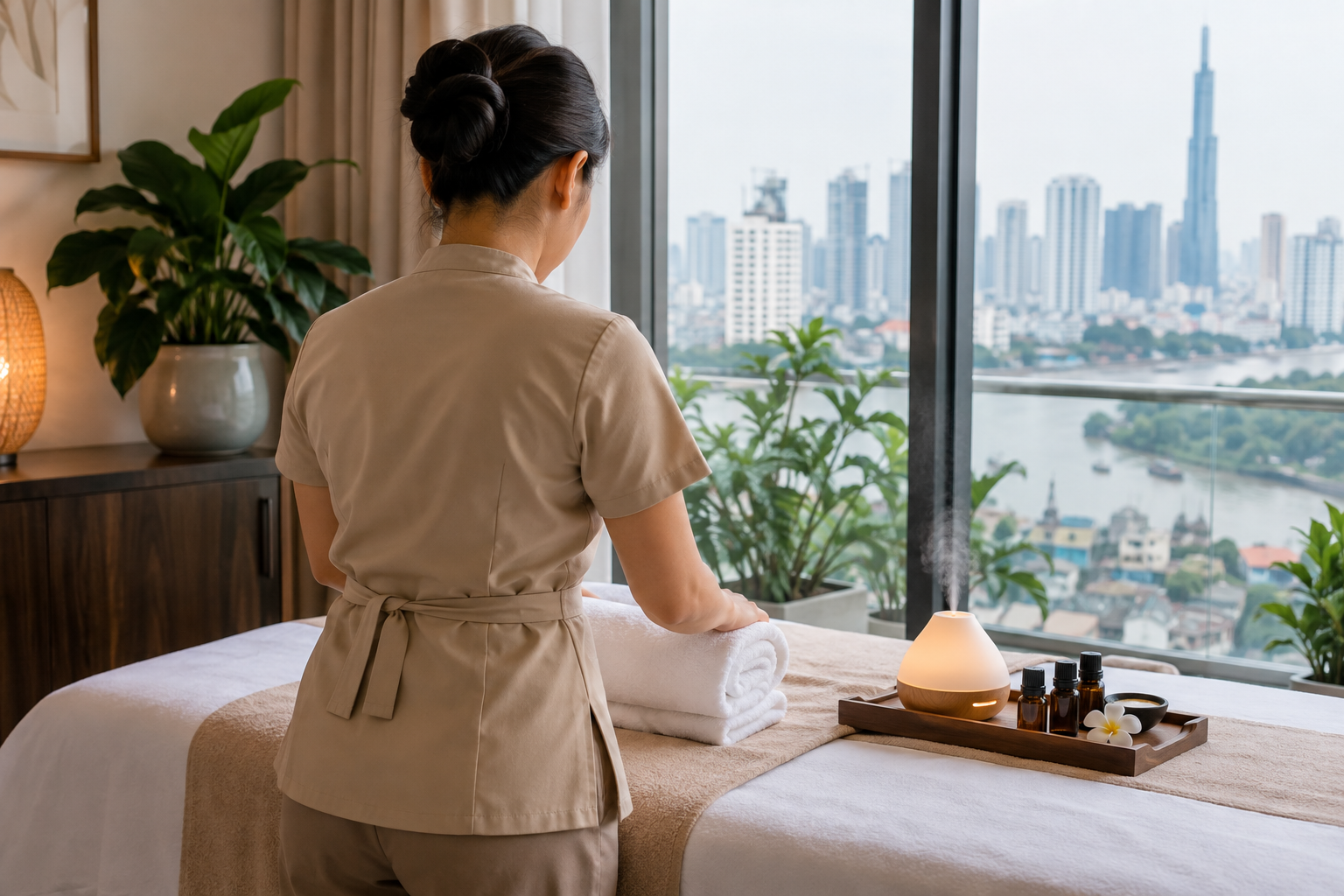
Aromatherapy massage Ho Chi Minh City appointments are easier to plan when scent, skin contact, pressure, timing and access are discussed in advance. Ask for the ingredient information you need, choose a fragrance level that feels comfortable and confirm the service and final price. For an appointment, contact Home Spa Massage with your address and preferences; treat the booking as confirmed only after the provider replies with the agreed details.
A sample message you can adapt
“Hello, I’d like to check availability for an aromatherapy massage at [address] on [date] around [time]. Please confirm the session length, total price and whether the scent is diffused or applied to the skin. I prefer [light fragrance / unscented], [gentle / moderate] pressure and would like [area] focused on. Please let me know what supplies are included and how building access works.”
This message covers the main details without turning a booking request into a medical questionnaire. If you have a relevant allergy or health condition, add the practical restriction: for example, “Please do not use scented products,” or “I have been advised to avoid pressure on my lower legs.” Share private information only as needed for safe service and booking.
How to respond if the provider cannot confirm ingredients
If the provider does not know the product ingredients, you can choose a fragrance-free session, ask them to check before dispatch or book a different service. Do not accept an unknown topical product if you already know that you react to certain ingredients. Similarly, if a strong smell affects your breathing, ask for no diffuser in the room rather than relying on ventilation after it has started.
When fragrance affects other guests
In a shared hotel room or apartment, ask everyone present whether fragrance is acceptable. People may have asthma, allergies, migraine triggers or simply dislike scent. A no-fragrance choice is often the simplest shared-space option. Tell the provider before arrival so the therapist can prepare the right supplies.
Keep the experience grounded in what is known
Online descriptions sometimes attach broad claims to oils, such as balancing hormones, removing toxins or curing sleep disorders. Do not treat those phrases as established outcomes. The massage service should be described accurately as a relaxation experience, while health claims need reliable clinical evidence. NCCIH’s overview is a useful starting point for understanding that research varies by condition and that massage should not replace care.
If you want help with insomnia, anxiety, headaches or persistent pain, talk to a clinician about evidence-based options. You can still choose a massage because you enjoy the atmosphere, but make the decision with realistic expectations. This distinction improves trust: guests know what the appointment can offer and what it cannot promise.