
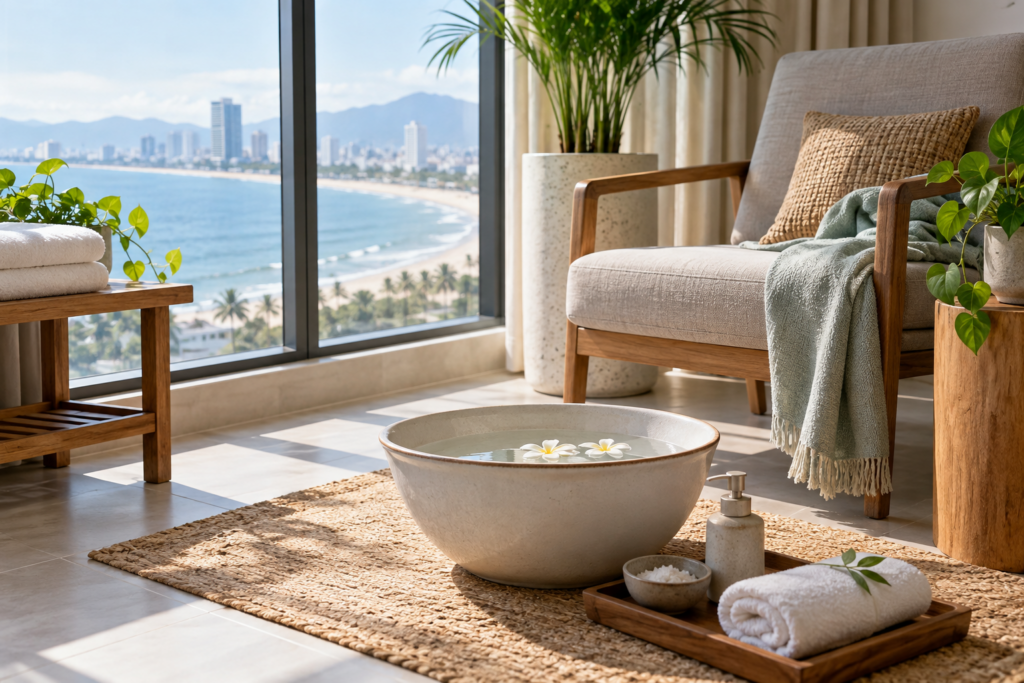
Foot massage in Da Nang may be a welcome pause after sightseeing, beach walks or long hours on your feet. Service labels vary, so ask whether your session covers the soles only, ankles or lower legs, and whether it includes a soak or product. A relaxation massage is not a diagnosis or guaranteed treatment for foot pain. This guide explains how to select a comfortable session, arrange access at a home or accommodation, and recognize when a symptom should be assessed by a healthcare professional.
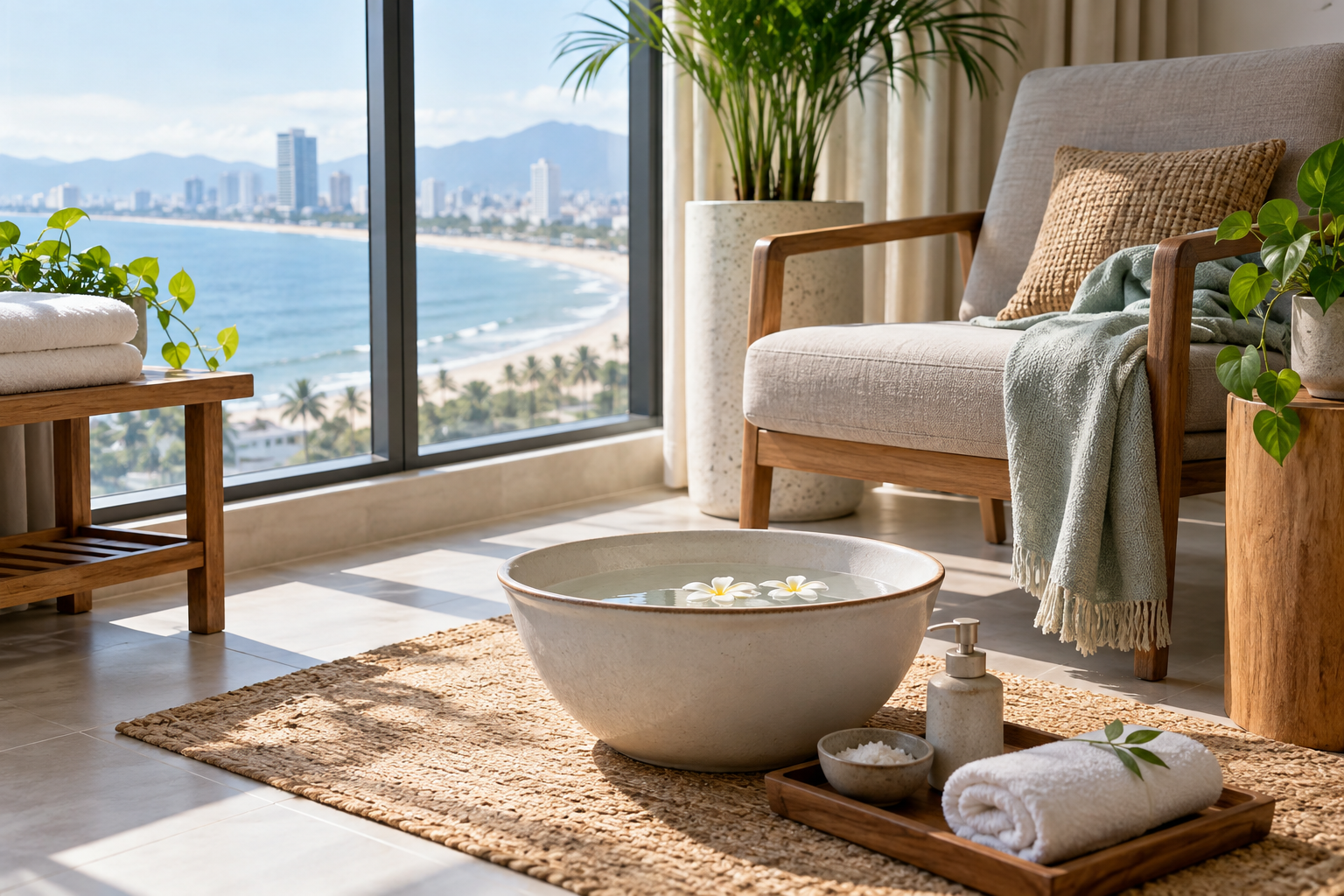
Quick answer: Confirm the areas, duration, pressure, hygiene and price before booking. Tell the provider about skin problems, injuries, numbness or circulation concerns, and do not massage an acute or unexplained symptom without appropriate advice.
💡 Tip: Confirm scent and pressure. ⚠️ Stop if the session causes pain or irritation. ✅ Verify the total cost and appointment details. 🔎 Ask for unclear terms in writing.
Foot massage Da Nang: What to know
What does foot massage mean?
The exact service depends on the provider. Some appointments focus on soles and ankles; others include calves, warm towels or a foot soak. Oil, lotion, water temperature and the time spent on each foot may also vary. Ask for a description of the current package and confirm which steps are optional.
Home Spa Massage lists foot and leg care among its Da Nang service options. Confirm that the provider can offer the requested focus at your location and date. For broader service information, see the Da Nang home spa service page and the at-home full-body massage guide. This article focuses on foot care and appointment preparation rather than repeating the general booking page.
Foot massage is not the same as podiatry, physiotherapy or treatment from a clinician. A provider may help you relax, but should not diagnose the reason for pain or promise to resolve a medical condition.
When a focused foot session may suit you
If your feet feel generally tired after a normal day, a gentle session may be a comfortable way to wind down. Visitors who have walked more than usual may prefer a short appointment with light pressure. Someone with a known condition or altered sensation should get clinical advice before booking, because it may be harder to notice excessive pressure or irritation.
Consider what you want from the session: simple relaxation, attention to both feet, or a broader foot-and-leg experience. State that preference clearly. Avoid asking a massage therapist to evaluate swelling, diagnose a heel problem or interpret numbness. Those concerns should be directed to a qualified healthcare professional.
Choosing pressure and duration
Pressure should be adjustable and comfortable. You can begin lightly and request a change at any time. Sharp pain, burning, tingling or numbness is a signal to stop or alter the technique. There is no need to tolerate discomfort to prove that the massage is working.
Ask whether setup is included in the session length, how much time is devoted to each foot and whether the calves are part of the service. A longer appointment may provide more time but is not automatically better; choose what suits your schedule and comfort.
| Your preference | Ask for | Confirm |
|---|---|---|
| After sightseeing | Gentle pressure and a foot-focused session | Whether calves or legs are included |
| Sensitive feet | Light touch and regular check-ins | Whether the therapist can avoid sore spots |
| No skin product | No oil or lotion | Product-free option availability |
| Foot soak | Warm water only or no soak | Basin, temperature and any ingredients |
| Accommodation visit | In-room setup | Property rules and arrival instructions |
Preparing for a session at home or while traveling
Choose a clean, quiet area with enough space for a chair and supplies. Tell the provider whether you want a foot soak before they arrive. Keep footwear close because oil or lotion can make feet slippery. Move valuables and fragile items out of the working area and ensure pets do not interfere with products or equipment.
For a hotel, villa or resort, ask reception or property management whether an outside therapist may enter. Give the service the exact property name, entrance, room or unit details where appropriate, map location and lobby instructions. For apartments, clarify registration or security procedures. The existing Da Nang hotel massage guide and apartment massage guide explain access questions in more detail.
Confirm arrival time, session length, total price and any additional charge in writing. The website currently lists a late-night surcharge after 23:00; verify the applicable amount and whether it applies to your requested time. For a complete appointment, provide guest count and preferred pressure in the first message.
Hygiene and skin care
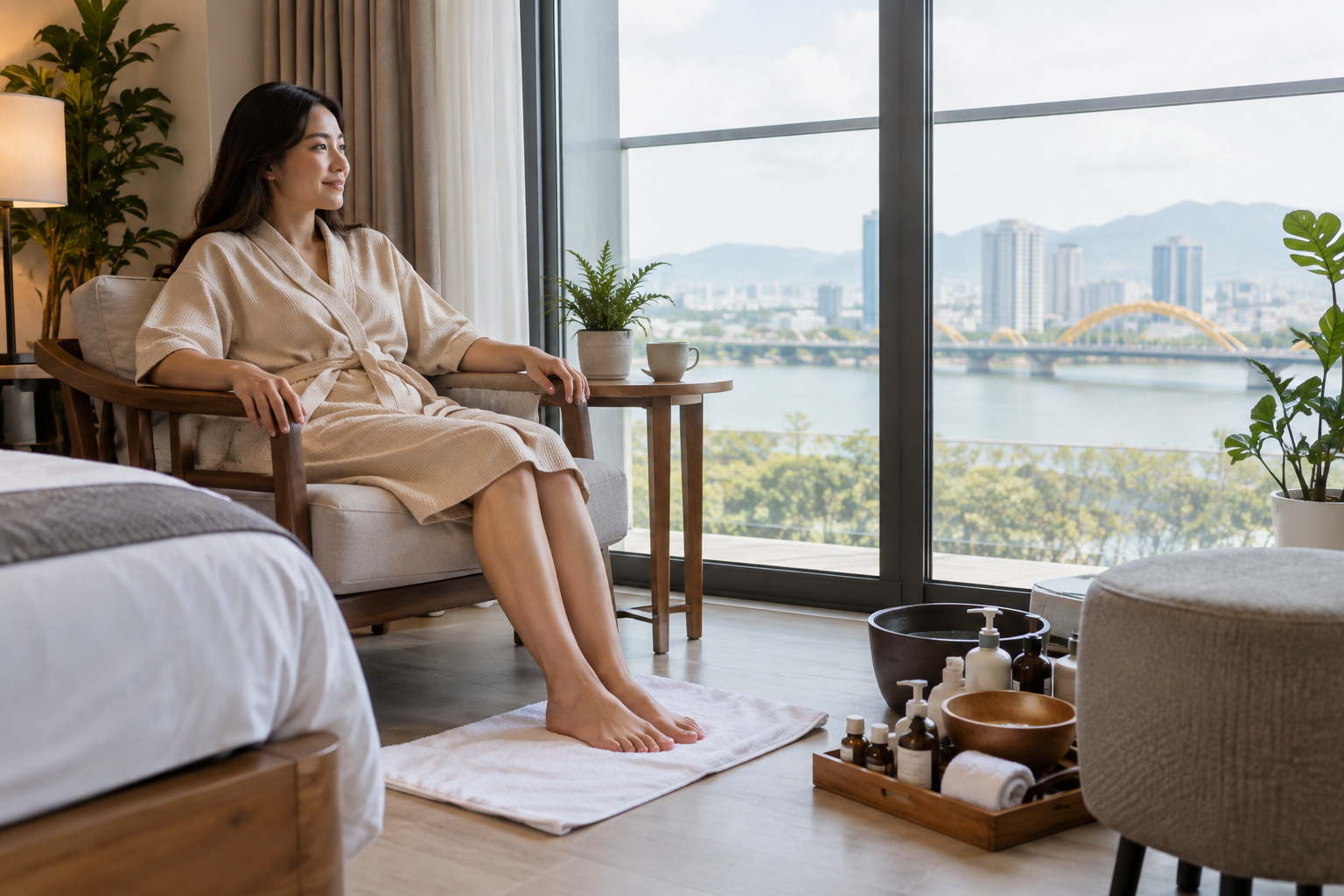
Ask whether fresh towels are used and how a basin is cleaned between guests. If lotion or oil is planned, ask for its name and ingredients if you have allergies or sensitive skin. You can decline a product. Do not massage open cuts, blisters, active fungal infections, inflamed skin or bruises.
If you prefer to wash your feet beforehand, do so normally; avoid using harsh exfoliants immediately before a session. Tell the therapist if you have a corn, blister, recent pedicure irritation or area that should not be touched. Clear communication protects comfort and prevents the therapist from applying pressure where it is unwelcome.
Safety: symptoms that are not a relaxation issue
Seek medical assessment for sudden swelling, severe or worsening pain, new numbness, a recent injury or signs of infection. Do not use massage in place of care for a suspected blood clot or a wound. People with diabetes, reduced sensation, circulation problems, fragile skin, a bleeding disorder, blood-thinning medication or recent surgery should ask a clinician whether massage is appropriate.
Healthdirect’s massage therapy page lists conditions where massage may be unsuitable or require professional advice. NCCIH also notes rare reports of serious side effects and recommends discussing appropriateness with a healthcare provider when uncertain; see its massage overview. The guidance is general and cannot assess your individual condition.
During and after the appointment
Agree on pressure and boundaries before starting. The therapist should explain the setup and let you request a pause. You can ask to skip a foot, avoid a particular area, stop a soak or end the massage altogether. If you notice an unexpected skin reaction or feel unwell, stop immediately.
Afterward, stand slowly and wipe away any slippery product if needed. Wear stable sandals or shoes. A little relaxation is a reasonable expectation; pain relief or another health result is not guaranteed. If new symptoms develop or an existing concern worsens, contact a healthcare professional.
Booking checklist
Send the following in your booking message:
- Your preferred date, time and backup window.
- Exact address, accommodation name and entrance instructions.
- Number of guests and session duration.
- Whether you want feet only, ankles or lower legs included.
- Pressure preference and any area to avoid.
- Allergies, skin concerns, injuries or relevant medical information.
- A request to confirm total cost and appointment status.
Wait for the provider to confirm the time, therapist, service, location and full price. If you are in a hotel or managed property, secure permission before the therapist travels.
FAQ: Frequently asked questions
Does foot massage in Da Nang include a foot soak?
Not necessarily. Ask whether a soak is part of the current package, what products are used and whether you can decline it.
Can I ask for gentle pressure?
Yes. Tell the therapist before the session and request check-ins. Ask for an adjustment or stop if pressure becomes painful or uncomfortable.
Is foot massage appropriate after a long walk?
For ordinary tiredness, some guests prefer a gentle relaxation session. If you have swelling, sharp pain, a blister or a suspected injury, seek medical advice first.
Can a massage therapist visit my resort or villa?
It depends on property access rules and the provider’s schedule. Confirm permission with management and share clear entrance directions.
Is foot massage a treatment for plantar fasciitis?
It should not be presented as a cure. Persistent heel pain or difficulty walking deserves assessment by a qualified clinician.
What should I do if my feet feel numb during a session?
Ask the therapist to stop. If numbness continues or is new, seek medical advice instead of continuing the massage.
Planning around excursions and beach days
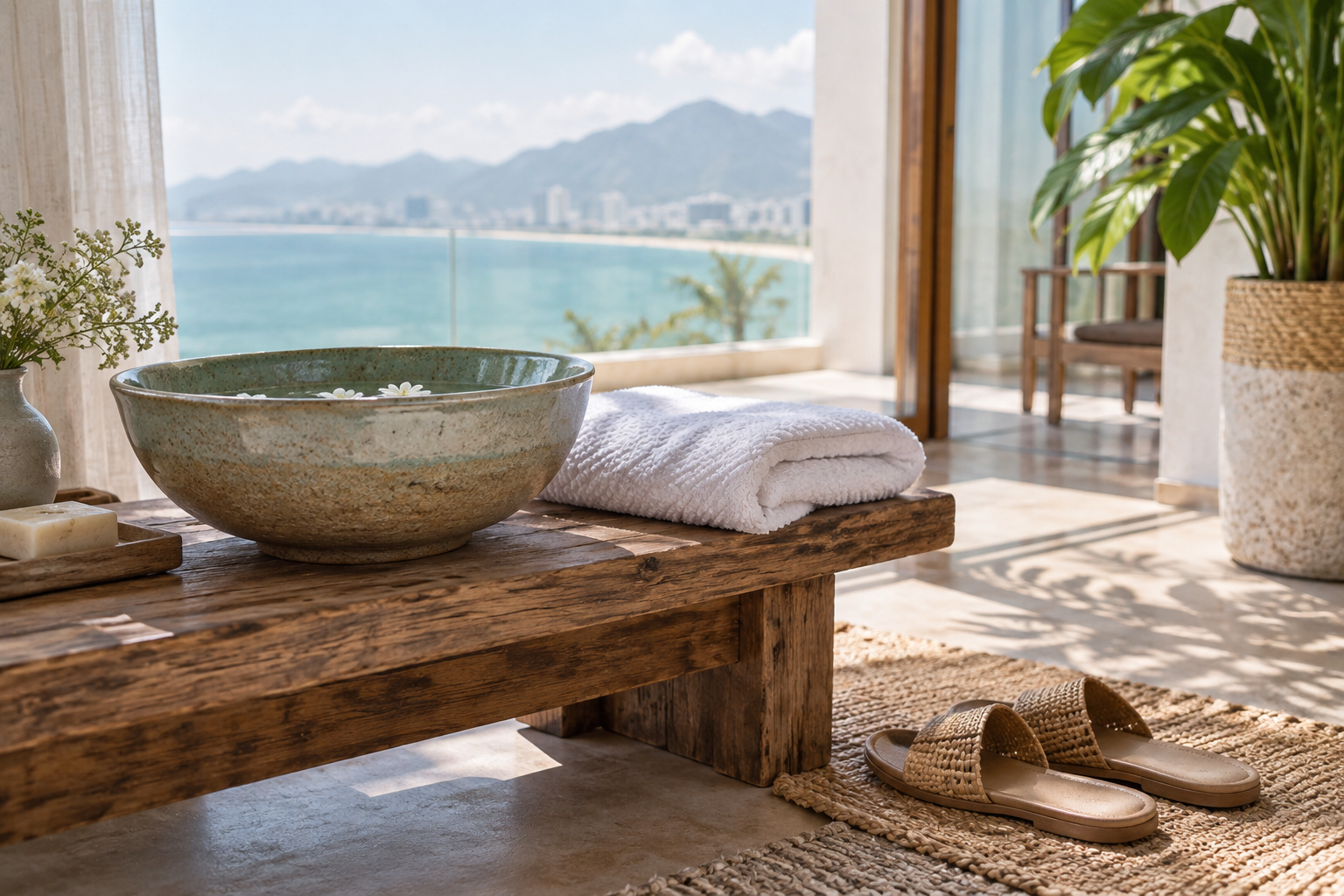
After a day at the beach or on walking tours, check your feet before scheduling massage. Sunburn, cuts, blisters, sand irritation or a twisted ankle are reasons to avoid pressure on the affected area. A relaxing foot session may sound appealing after a busy itinerary, but it should not cover up a symptom that needs care. If discomfort changes your gait or continues after rest, ask a clinician rather than relying on massage.
For a comfortable appointment, leave time to shower or clean your feet normally and change into relaxed clothing. You do not need to scrub or exfoliate the skin. If you have been in salt water or sand, rinse and dry your feet and let the therapist know if your skin feels irritated. Keep sandals nearby because oil may make the floor or soles slippery.
Questions about reflexology claims
Some foot services are described using reflexology language or maps that associate areas of the foot with other parts of the body. If that is part of a provider’s menu, ask what the technique involves and what outcomes are being claimed. Do not use a pressure-point chart to self-diagnose a health condition or delay a medical visit. The experience may feel relaxing, but a service provider should not promise that pressing a foot area will cure a disease elsewhere in the body.
This distinction helps you choose based on the session itself. If you enjoy a gentle foot-focused treatment, you can request it for comfort without accepting unsupported medical explanations. For symptoms such as ongoing pain, swelling or numbness, consult a healthcare professional.
Make a booking accessible
If you have limited mobility, difficulty standing or use a walking aid, explain what setup would make the appointment comfortable. Ask whether the therapist can work with a stable chair and whether you need assistance transferring. Do not accept a position that feels unsafe. If the provider cannot confirm a safe arrangement, choose another option or ask a clinician for advice.
Travelers should also consider the hotel’s layout: stairs, elevator access, long corridors and lobby registration can affect arrival. Send accurate instructions and keep your phone available. Confirm the price and appointment time again if your room or accommodation changes after booking.
Choosing massage versus a spa facility
An at-home foot session offers convenience if you prefer not to travel after walking, but it depends on room space, setup and provider access. A dedicated spa may have a foot-care station, changing area or facilities that a hotel room does not. Ask what each option actually includes before deciding. The convenience of an in-room visit should not lead you to accept an unclear price or a technique that feels uncomfortable.
If you book at home, clarify what supplies the therapist brings and whether a foot basin is part of the visit. If you choose a fixed location, check its address, appointment time and any included amenities. In both cases, ask about pressure and products, and tell the provider about skin sensitivities or areas to avoid.
For visitors with an evening itinerary, leave enough time to get back to your accommodation safely. If oil is used, wipe it off or wait for it to absorb before putting on shoes. Comfortable footwear matters more than extending the session by a few minutes.
Book for comfort and clarity
Foot massage Da Nang is easiest to arrange when you know what is included, where the therapist may enter, what products will be used and how much the session costs. Share health concerns and pressure preferences early; choose a gentle approach if you are unsure. For a relaxation appointment, contact Home Spa Massage with your location and requested time, then wait for a complete confirmation before relying on the booking.