
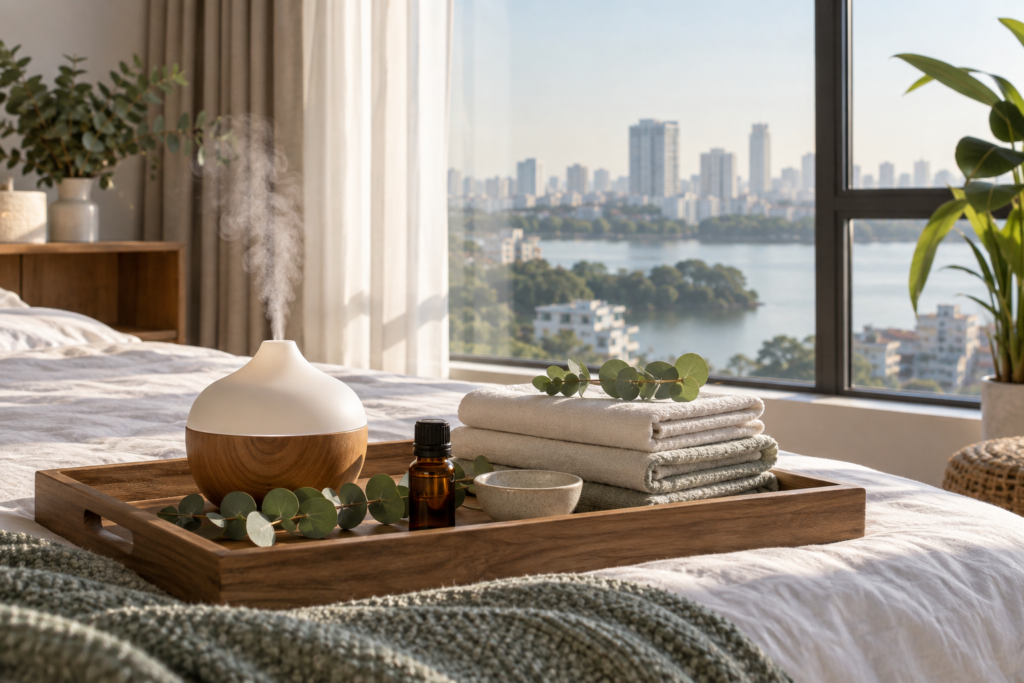
If you are considering aromatherapy massage in Hanoi, the most useful first step is to ask what the session actually includes: whether scented oil is optional, which products are used, how pressure is adjusted, and whether the therapist can work in your home or accommodation. Aromatherapy usually combines massage with a chosen scent; it should be treated as a relaxation preference, not as a medical treatment. This guide explains how to choose a comfortable session, what to tell a provider before the appointment, and how to prepare a room in Hanoi. Home Spa Massage describes aromatherapy oil as an available option, while availability at a specific address and time should be confirmed directly.
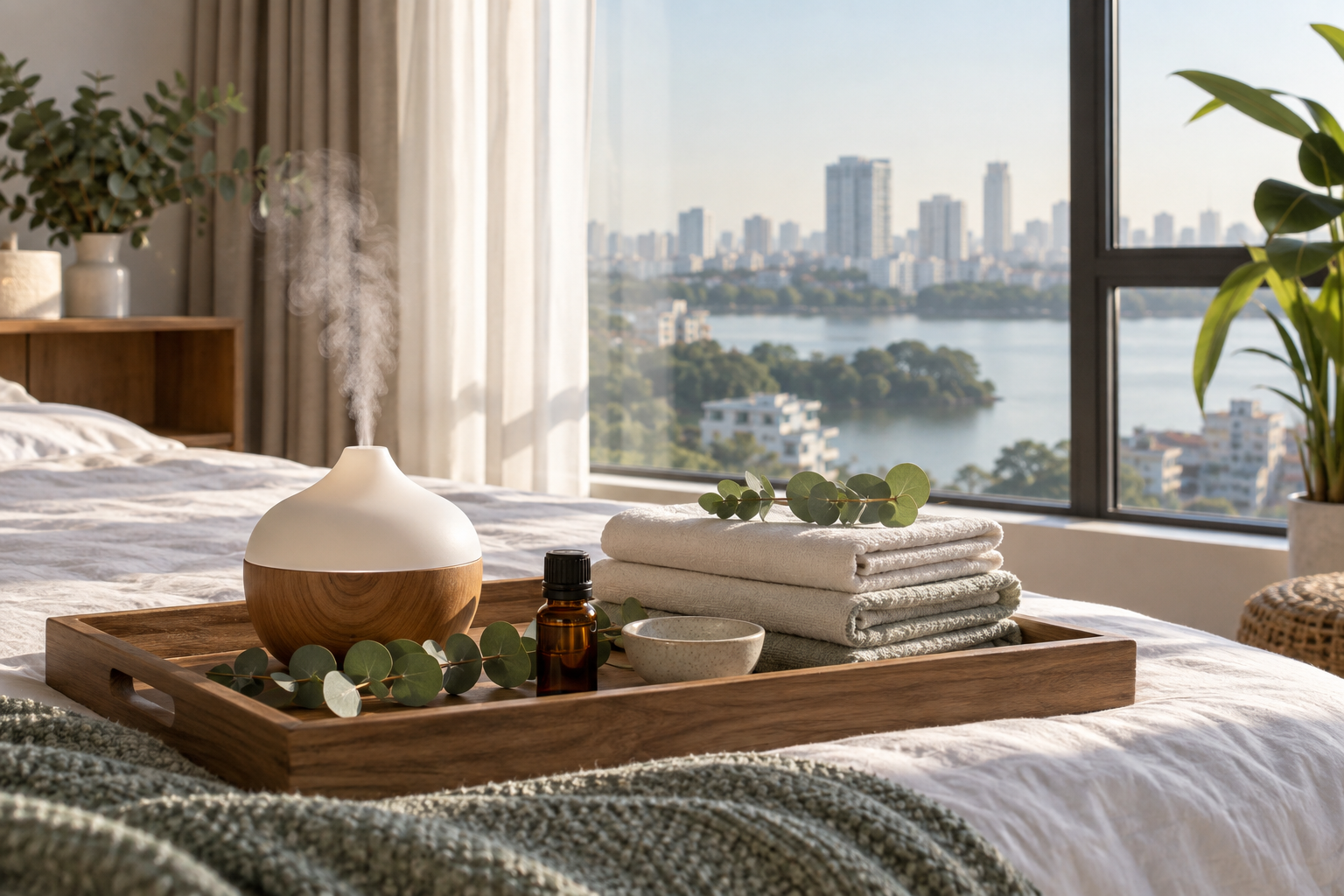
Quick answer: A good at-home aromatherapy session begins with a clear conversation about scent sensitivity, skin preferences, pressure, session length and the service location. You can request an unscented option or ask to skip oil if the aroma is uncomfortable.
💡 Tip: Confirm scent and pressure. ⚠️ Stop if the session causes pain or irritation. ✅ Verify the total cost and appointment details. 🔎 Ask for unclear terms in writing.
Aromatherapy massage Hanoi: What to know
What does aromatherapy massage mean?
Aromatherapy massage generally pairs hands-on massage with an aromatic product, often a diluted essential oil or a scented massage oil. The exact ingredients and method vary by provider. Some sessions use a diffuser in the room; others use a carrier oil on the skin. These are different approaches, so ask which one is planned instead of assuming that every aromatherapy appointment includes both.
The scent can be part of the atmosphere, but it does not establish that a session will treat insomnia, anxiety, pain or another condition. Research on massage and complementary approaches varies by health outcome, and evidence for an individual aromatherapy product cannot be inferred from a pleasant experience. The U.S. National Center for Complementary and Integrative Health (NCCIH) advises consumers to understand the evidence and safety of complementary approaches and to consult a health professional when uncertain about suitability. See its massage therapy overview.
For a home booking, the practical questions matter more than a broad label: what oil is used, whether it is optional, how the therapist checks comfort, and how the appointment is arranged at your building. You can review the existing Hanoi at-home massage guide for general booking context and the Hanoi hotel massage guide if you are staying in accommodation.
Who may prefer a scented session—and who may prefer unscented?
Aromatherapy may suit someone who enjoys a light fragrance and wants a calmer room atmosphere. It may be less suitable for a person who dislikes perfume, gets headaches around strong scents, has reactive skin, or shares the space with someone sensitive to fragrance. There is no need to tolerate a product to complete a session. Ask about a low-scent or unscented alternative before confirming.
People with asthma, allergies, migraine triggers, pregnancy, skin conditions or other health concerns should tell the provider and, when appropriate, ask a clinician whether a scented product or massage is suitable. Essential oils are concentrated materials; “natural” does not automatically mean non-irritating. Avoid applying a product to broken or inflamed skin, and stop if you notice burning, itching, breathing discomfort or another concerning reaction. This is general information, not individualized medical advice.
Questions to ask about the product
- Is the scent applied to the skin, diffused in the room, or both?
- Can I choose an unscented oil or decline oil entirely?
- What is the product name or ingredient list?
- How do you respond if I feel irritation or the scent is too strong?
- Can I ask for a small amount first and decide whether to continue?
These questions help you make a practical choice without needing to identify a particular essential oil as universally “best.” Scent preference is personal, and a product that feels pleasant to one guest may be distracting to another.
How to choose a session in Hanoi
Start with the outcome you want from the appointment. If your priority is quiet relaxation, ask for a gentle or moderate approach and a low-intensity scent. If you want a focused massage for a particular area, explain the area and your comfort level before the session begins. Do not assume that a stronger pressure is more effective; pressure should remain comfortable and adjustable.
Then confirm logistics. Hanoi addresses can involve a gated building, apartment reception, narrow access instructions or a hotel visitor policy. Give the provider the building name, complete address, map pin, preferred time and any entrance instructions. Confirm the number of guests and the agreed service length in writing. The site’s mobile massage Hanoi safety and hygiene checklist covers general questions about an in-home appointment.
| Booking detail | What to confirm | Why it helps |
|---|---|---|
| Scent | Scented, low-scent or unscented | Avoids a product that may bother you |
| Pressure | Light, medium or another comfortable level | Gives the therapist a clear starting point |
| Focus | Areas to include or avoid | Makes the session more personal |
| Location | Full address and access instructions | Reduces arrival confusion |
| Duration and price | Exact session length and total price | Prevents mismatched expectations |
The service page lists options and booking contact details, but current schedules and address coverage can change. Confirm the total cost, any late-hour surcharge and the appointment time directly before treating the booking as final.
Preparing your room for an at-home appointment
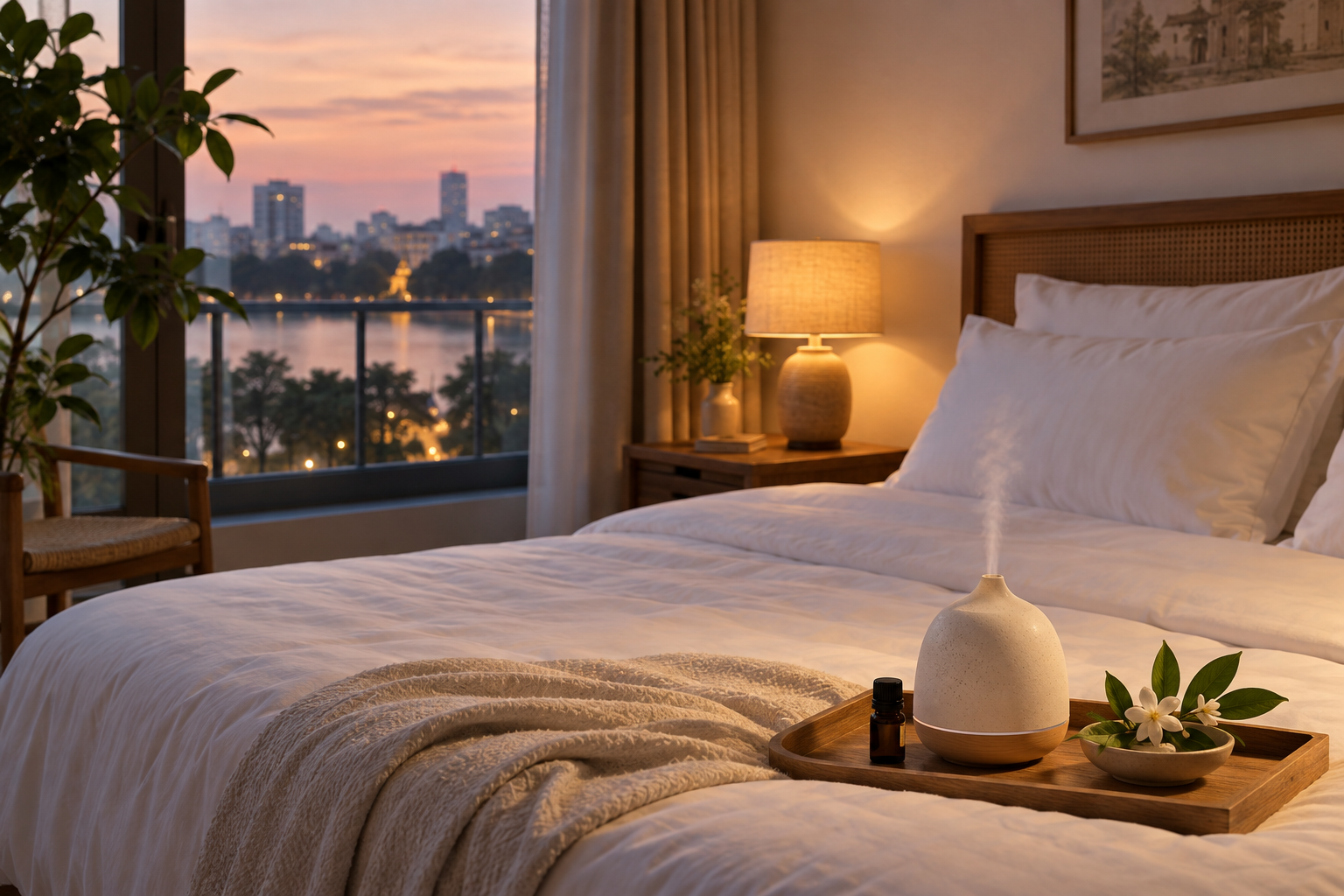
You do not need to recreate a hotel spa. A clean, quiet area with enough working space is usually the practical starting point. Move fragile objects, provide a clear route from the entrance, and choose a room where you can control ventilation and temperature. If you prefer not to diffuse fragrance, say so before the therapist sets up.
Keep pets in another room if they may interrupt or come into contact with oils. If children or other household members will be present, agree on privacy and access in advance. A glass of water and a comfortable place to sit afterward are simple preparations; no special wellness ritual is required.
Before the session, mention any areas you do not want touched, sensitivities to products, recent injuries, medical devices or relevant health conditions. You can change your mind during the session. A professional appointment should allow you to request less pressure, a pause, a different scent level or an end to the session without having to justify the request.
What happens during a professional session?
The provider should confirm the service, time and address before travel. On arrival, the therapist should explain the setup, ask about scent and pressure preferences, and clarify how you will communicate if anything feels uncomfortable. The massage should proceed at a pace you can tolerate, with clear draping and respect for personal boundaries.
For aromatherapy, confirm that the product is used as agreed. If the oil is applied to skin, ask the therapist to stop if you feel stinging, warmth that concerns you, itching or another reaction. If the scent is diffused, you can request that it be turned off or moved away. Fresh air and a straightforward conversation are preferable to trying to endure a trigger.
Afterward, take a few minutes to sit up slowly and notice how you feel. Mild temporary relaxation or ordinary tenderness can occur, but unusual symptoms should not be dismissed as a normal response. Contact a healthcare professional if you have a concerning reaction or a health problem that persists.
Safety: when to pause and ask a clinician
Massage is not appropriate in every situation. NCCIH notes that rare serious harms have been reported, particularly with vigorous massage or in people who may have increased injury risk. Healthdirect Australia also lists situations where massage may be unsuitable or require medical advice, including certain circulation, skin, bone and post-surgical concerns; see its massage therapy guidance.
Tell the therapist about health circumstances that could affect pressure or positioning. Ask a doctor or midwife first if you are pregnant and unsure about the technique. Avoid massage over wounds, active skin infections, bruises or areas that are acutely painful unless a qualified clinician has advised otherwise. Do not use massage to delay medical assessment for unexplained or severe symptoms.
This advice is intentionally cautious. A home spa provider can adapt a relaxation appointment, but should not diagnose a condition or promise to cure it. If you have a medical question, a licensed healthcare professional is the right person to assess it.
A simple booking checklist
Before sending your request, prepare:
- Your preferred date and time, with an alternative if possible.
- The complete Hanoi address, building name and entrance instructions.
- The number of guests and session duration you want.
- Your scent preference: chosen fragrance, low-scent or unscented.
- Your preferred pressure and any areas to avoid.
- Relevant allergies, skin sensitivities or health considerations.
- A request to confirm the total price and any additional fee.
This information lets the provider check availability and helps you avoid surprises. Wait for a clear confirmation of therapist, arrival time, location, service and price before assuming the appointment is booked.
FAQ: Frequently asked questions
Is aromatherapy massage in Hanoi the same as essential-oil treatment?
Not necessarily. Providers use the label differently. Ask whether the scent is diffused, applied in a massage oil or offered as an optional feature, and request ingredient details if you have a sensitivity.
Can I ask for an unscented massage?
Yes. Tell the provider before the appointment and confirm that an unscented product or no oil is available. If the planned fragrance bothers you during the session, ask for it to be removed or stopped.
Does aromatherapy massage treat anxiety or pain?
It should not be presented as a guaranteed treatment. Massage may be studied for different symptoms, but findings vary and a relaxation service is not a substitute for medical care. Discuss persistent symptoms with a healthcare professional.
What should I wear or prepare?
Ask the provider what clothing and linens are supplied. Prepare a clean, private space and share any preferences about draping, scent, pressure and areas to avoid before the session begins.
Can I book this service at a Hanoi hotel?
The website has a separate Hanoi hotel massage page. Contact the provider to confirm the hotel’s visitor policy, current availability and whether aromatherapy is offered for your chosen appointment.
What if the scent or pressure feels uncomfortable?
Say so immediately and ask for a change, a pause or an end to the session. You are entitled to set boundaries throughout the appointment.
Choose comfort over a label
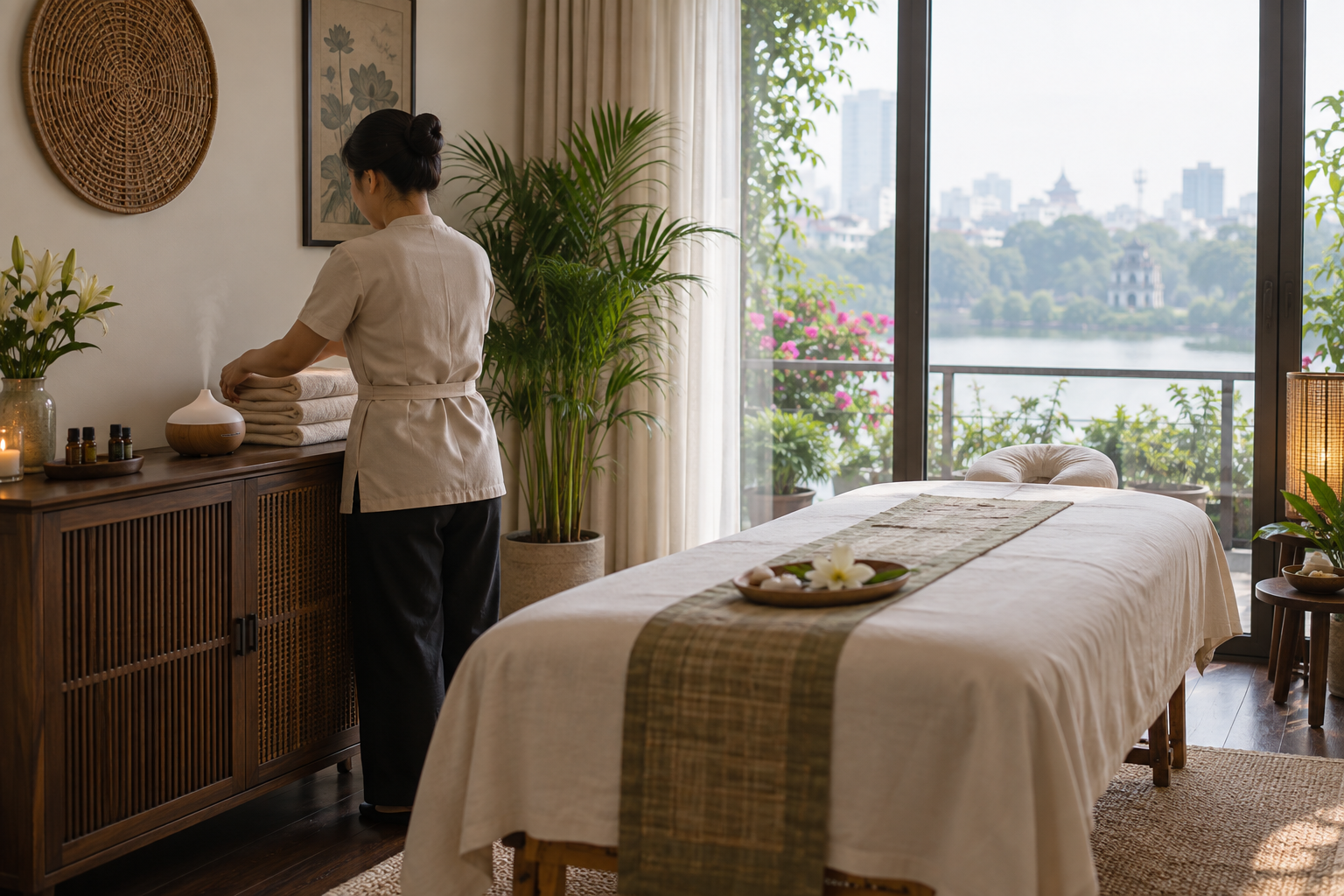
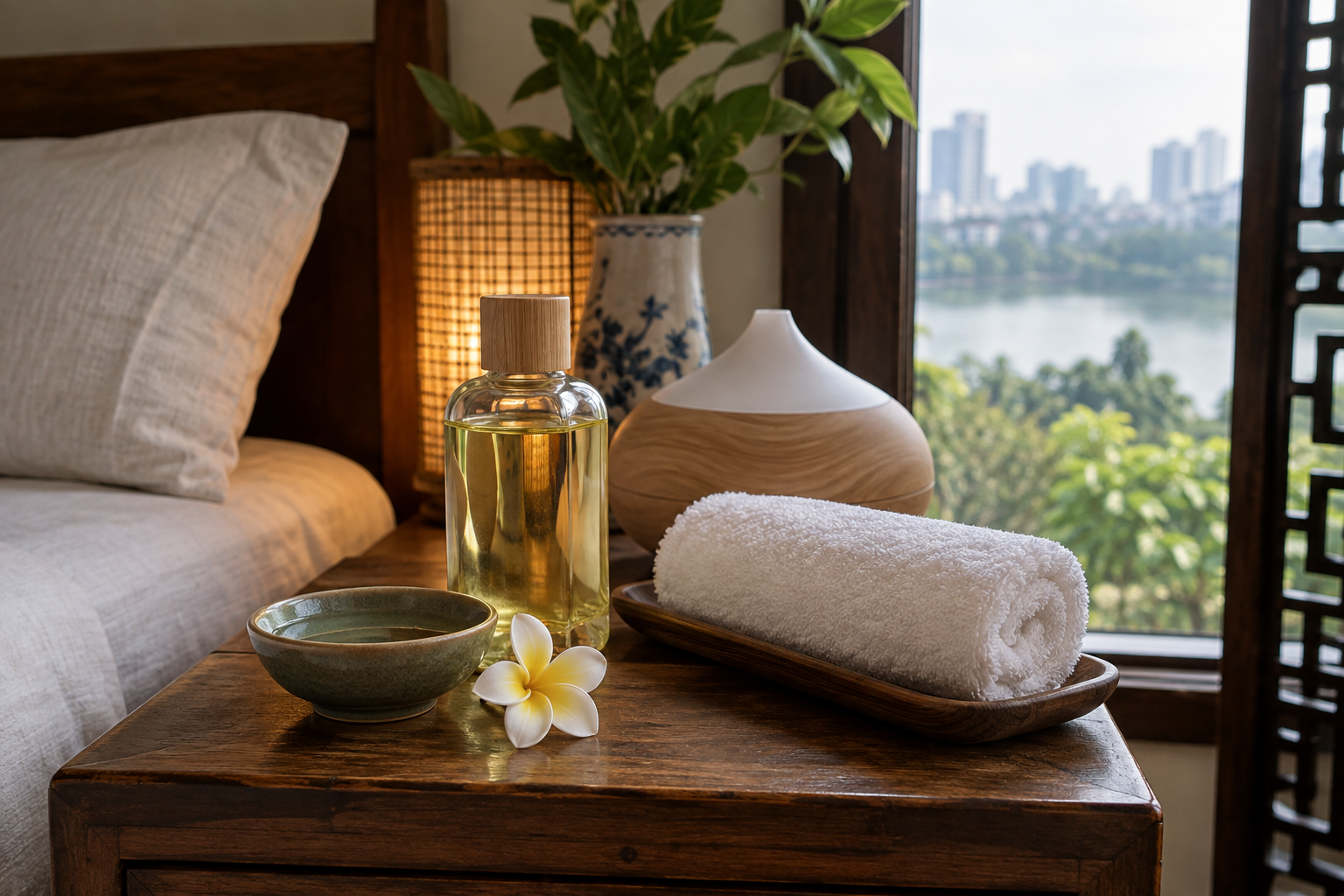
Aromatherapy massage in Hanoi is best planned around your preferences, not a promise attached to a particular scent. Confirm the product, pressure, address, session length and total cost; disclose relevant sensitivities; and ask for an unscented option if that is more comfortable. For a booking, share your location and preferred time through the website’s contact channels, then wait for written confirmation before the appointment.
A useful way to compare provider replies
When you contact more than one provider, compare the completeness of the answers rather than choosing only by the shortest response or lowest headline price. A useful reply should say whether the requested address is covered, which session length is available, whether fragrance can be omitted, what the full cost is and how the appointment is confirmed. If a provider cannot answer a product question immediately, ask when they can check; do not assume that “aromatherapy” means a specific ingredient.
Keep the conversation practical. You do not need to disclose private medical details in an initial message, but you should mention a sensitivity that could affect the service. You can say, “I react to strong fragrance, so please confirm a fragrance-free option,” without explaining your medical history. If your condition affects pressure, positioning or whether massage is suitable, consult a clinician and tell the therapist only the relevant limits.
Use a pre-session confirmation
Before the appointment, send one short summary: address, time, session length, scent choice, pressure preference and areas to avoid. Ask the provider to confirm each item. This creates a shared reference if a different therapist arrives or the service details were misunderstood. For hotel bookings, include the correct guest name or room details through the provider’s normal booking process, and verify the hotel’s entry rules separately.
If plans change, tell the provider as early as possible. Ask about cancellation and rescheduling before paying or accepting a late-hour appointment. These are service terms, not medical guidance, and they can differ by provider or date. Get the current policy in writing instead of relying on a general web page.
Managing scent after the session
If you are sensitive to fragrance, consider where the session will take place and how long the scent might remain. A diffuser may linger in a small room; oil on skin can transfer to clothing or bedding. You can request no diffuser, ask for a minimal amount of product, or choose a service without fragrance. Ventilation may help clear a room, but it is not a substitute for avoiding a trigger that causes symptoms.
After a topical product is used, follow the product guidance and ask the therapist how to wipe it off. Avoid touching your eyes after handling scented oils and wash your hands if necessary. Keep oils away from children and pets unless the product label explicitly indicates safe use around them. If a product causes a reaction, stop exposure and seek medical advice for persistent or serious symptoms.
What a high-quality service conversation sounds like
A professional booking conversation should make room for questions. The provider should be able to explain the general session, listen to your requested pressure, confirm whether fragrance is optional and tell you how to communicate during the massage. You should not be pressured to accept a scent, share more personal information than is necessary or agree to a technique you do not understand.
For guests unfamiliar with at-home massage in Hanoi, a clear service page and a responsive booking contact reduce uncertainty. They do not by themselves prove a particular practitioner credential or guarantee a result. Check the details that matter to your own booking—availability, address, price, product and privacy—then decide whether you are comfortable proceeding. If a reply is evasive about boundaries or costs, pause and clarify before confirming.