

Foot massage in Hanoi can be a convenient way to unwind after commuting, standing at work or walking around the city. Before booking, clarify whether the session focuses only on the feet or includes lower legs, how long it lasts, what products are used and whether the therapist can serve your exact address. A relaxation massage may feel pleasant, but it should not be treated as a diagnosis or cure for persistent foot pain. This guide offers practical selection criteria, preparation tips and safety considerations for residents and visitors arranging a session at home or in a hotel.

Quick answer: Choose a foot massage by comfort, therapist communication, hygiene and a clearly agreed scope. Tell the provider about injuries, skin conditions, sensitivity and preferred pressure before the appointment begins.
💡 Tip: Confirm scent and pressure. ⚠️ Stop if the session causes pain or irritation. ✅ Verify the total cost and appointment details. 🔎 Ask for unclear terms in writing.
Foot massage Hanoi: What to know
What is included in a foot massage?
“Foot massage” can refer to several different experiences. One provider may focus on the soles and ankles; another may include the calves or combine foot care with a longer full-body session. Some use oil, while others work through a towel or with minimal product. There is no universal format, so confirm exactly what the appointment includes rather than relying on a service name alone.
The Home Spa Massage website describes foot and leg care among its at-home options. Ask whether the current Hanoi booking can be arranged as a dedicated foot session, what duration is available and whether the therapist brings the necessary clean supplies. You can start with the Hanoi at-home massage guide and, if you are staying in a hotel, check the hotel appointment guide.
Foot massage is distinct from medical assessment, podiatry and treatment for an injury. Techniques and terminology also vary across providers. Ask for a plain-language description of the service and avoid relying on claims that pressure points can diagnose or treat unrelated conditions.
Who may find a session useful?
People who spend long hours standing, wear unfamiliar shoes, walk extensively or simply enjoy a focused relaxation session may prefer foot care. A gentle session can provide a structured pause in a busy day and may feel soothing for tired feet. Comfort is subjective: a technique that feels relaxing to one person may feel too intense to another.
If you are visiting Hanoi, consider when you want the appointment. After a long walking day, you may prefer light pressure and a shorter session rather than intense work on already tender areas. If you have a specific concern—such as swelling, numbness, new pain or a change in skin color—do not ask a relaxation therapist to diagnose it. Seek medical advice as appropriate.
How to choose pressure and session length
Start by describing your goal in everyday terms: “gentle relaxation,” “light pressure,” or “please avoid the heel.” You do not need to know technical massage vocabulary. During the session, speak up if pressure feels sharp, painful or uncomfortable. A massage is not required to hurt in order to be useful.
Session length should match your time, tolerance and the provider’s actual menu. A short session can be enough for a simple wind-down; a longer appointment allows more time for both feet and lower legs if those areas are included. Confirm whether consultation and setup are part of the booked duration.
| Your priority | A practical request | Confirm before booking |
|---|---|---|
| Relax after walking | Gentle pressure and focus on comfort | Whether calves are included |
| Avoid product contact | No oil or towel-based work | Whether the provider can accommodate it |
| Sensitive soles | Light pressure and frequent check-ins | How to pause or adjust the technique |
| Limited time | A focused, shorter appointment | Exact hands-on duration |
| Hotel visit | Appointment in the room if allowed | Property entry rules and arrival process |
Use this as a conversation guide, not as a prescribed treatment plan. The therapist should adapt the session to your feedback and stop if you ask.
Hygiene and setup for an at-home session
Clean supplies and clear expectations are part of a comfortable booking. Ask whether fresh towels are used for each guest, what product touches the skin and how tools or basins are cleaned. If you have a sensitivity, request the ingredient list or decline the product. You can also ask the therapist to wash hands before starting and to explain any equipment being used.
Prepare a clean chair or resting surface, adequate lighting and enough space for the therapist to work. Keep the route to the room clear. If you are in an apartment building, send the full address, building name, unit information where appropriate and instructions for reception or the lobby. For a hotel, check whether outside service providers are allowed and how they should register.
The mobile massage Hanoi page provides a broader checklist for evaluating an in-home appointment. Confirm the current booking time, total price and any late-hour fee directly with the service, since schedules and charges can change.
Before your appointment
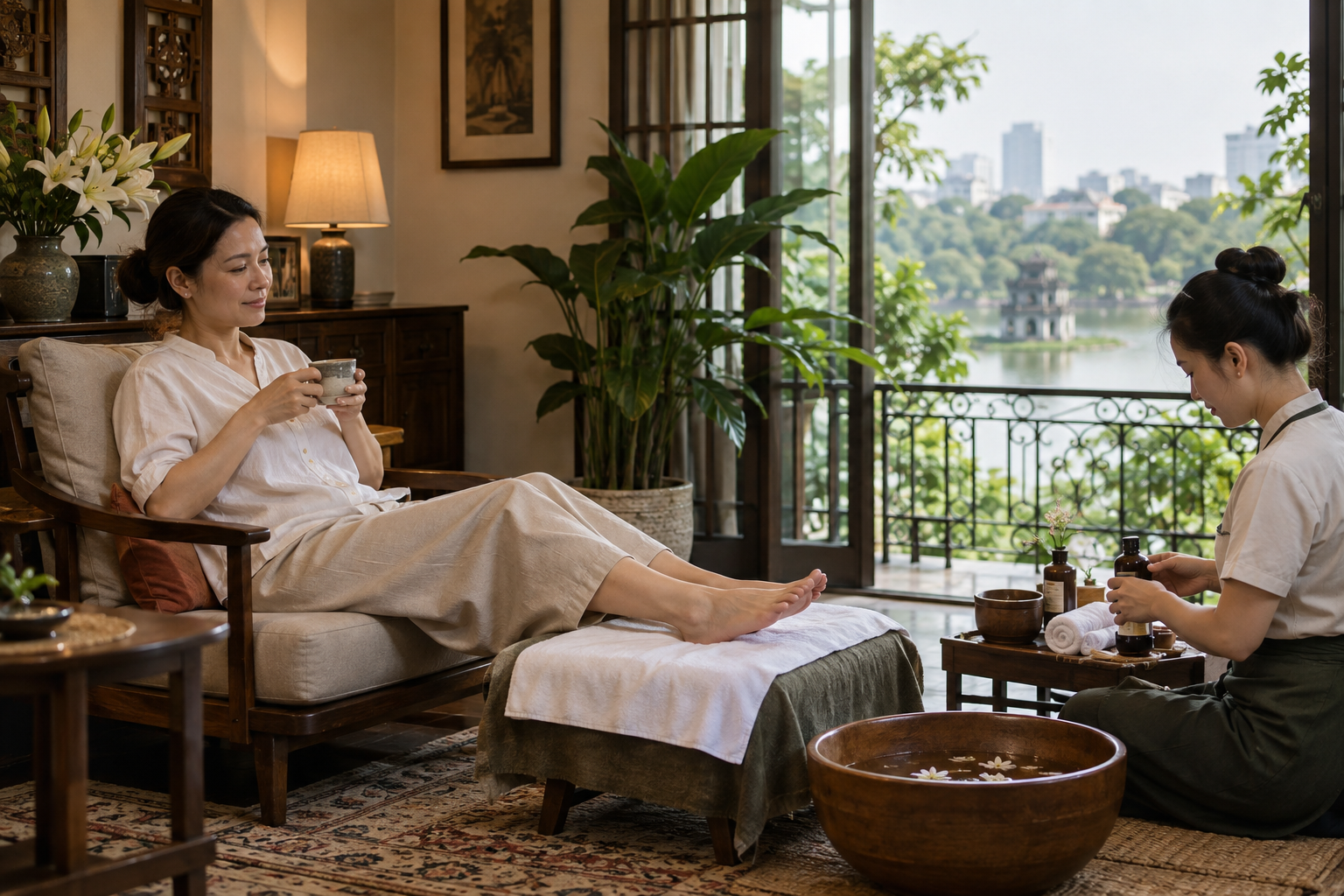
Wash your feet as you normally would and mention any product allergy or discomfort. Avoid shaving immediately before a session if it tends to irritate your skin. You do not need to soak your feet unless the provider specifically asks; confirm whether a basin is part of the appointment and whether you prefer to skip it.
Tell the therapist about recent injuries, surgery, bruising, wounds, rashes, fungal infections or areas that should not be touched. If you take medication that affects bleeding or have a circulation or nerve condition, consult your clinician before booking massage. This is especially important when considering firm pressure.
Safety: signs that call for medical advice
Do not book a massage over an open wound, active skin infection, significant bruise or an acute injury. If one foot becomes suddenly swollen, hot, discolored or severely painful, seek medical assessment instead of trying to massage the symptom away. Persistent numbness, tingling or unexplained pain also deserves evaluation.
Healthdirect notes that massage may be unsuitable for people with some conditions, including blood clots, certain skin problems, osteoporosis, nerve damage, easy bruising, recent surgery and some serious heart or kidney conditions. Its massage therapy safety guide recommends discussing health concerns with a doctor. NCCIH also cautions that rare serious harms have been reported and that people who are unsure should speak with a healthcare provider; see Massage Therapy: What You Need to Know.
These sources provide general guidance, not an individual medical decision. If you are pregnant, receiving cancer treatment, managing a chronic condition or recovering from an operation, ask your clinician what kind of massage, if any, is appropriate.
During and after the session
The therapist should confirm your preferences before beginning. Ask for a towel or draping that feels comfortable, and keep your personal boundaries clear. You can request lighter pressure, a change in position, a product-free approach or a pause at any time. Stop the session if you feel unwell or notice a skin reaction.
After the appointment, sit up gradually and take a moment before walking. If you have applied oil, ask whether it should be wiped off and use footwear that will not become slippery. Mild temporary tenderness can happen, but severe or worsening pain is not something to push through. Contact a healthcare professional if you have concerning symptoms.
Booking checklist for Hanoi
Send a concise request containing:
- Your complete address and building or hotel instructions.
- Preferred date and arrival window.
- Number of guests and requested session length.
- Whether you want feet only or feet and lower legs.
- Pressure preference and any areas to avoid.
- Allergies, skin sensitivities or relevant health concerns.
- A request to confirm the total price and supplies included.
Wait for the provider to confirm all details. A message asking about availability is not the same as a confirmed booking; make sure you have the agreed date, time, location, scope and total cost.
FAQ: Frequently asked questions

Is foot massage in Hanoi available at home?
The website lists foot care among its service options, but you should confirm that it is currently available at your address and preferred time. Provide your location and ask what the session includes.
Does foot massage include the calves?
That depends on the provider and package. Ask whether the therapist will work on the ankles or lower legs and specify any areas you do not want included.
Should foot massage feel painful?
No. Pressure should remain within your comfort level. Tell the therapist immediately if it feels sharp, painful or causes numbness, and ask for lighter pressure or a stop.
Can I get a foot massage with a skin condition?
Do not massage over an active infection, open wound or inflamed area. Ask a healthcare professional if you are unsure whether your condition is safe for massage.
What should I ask before booking a hotel session?
Confirm hotel access rules, therapist arrival instructions, appointment length, products and total price. The hotel may require reception registration or may restrict outside providers.
Is foot massage a treatment for plantar or nerve pain?
A relaxation service should not be marketed as a diagnosis or guaranteed treatment. Persistent or severe pain, numbness or a new injury should be assessed by a qualified healthcare professional.
Make the appointment fit your comfort

The best foot massage Hanoi booking is one where the scope, pressure, supplies and price are clear before the therapist arrives. Share sensitivities and health concerns honestly, request adjustments during the session and seek medical advice for symptoms that go beyond ordinary tiredness. To check availability, contact Home Spa Massage with your Hanoi location, preferred time and requested focus, then wait for confirmation before planning around the appointment.
Foot care around a busy day in Hanoi
Plan the appointment at a time when you can rest afterward rather than rushing straight into another long walk. If you have been wearing new shoes, notice blisters or feel a hot spot, tell the therapist and ask that the area be avoided. A massage is not the time to test whether a sore patch can tolerate more pressure. Protect irritated skin and let it recover; seek advice if you see signs of infection or if symptoms worsen.
People arriving after a full sightseeing day may have feet that feel tired simply from more walking than usual. In that situation, a gentle session and comfortable footwear afterward are sensible preferences. If you have pain that changes how you walk, swelling that is unusual for you, or a symptom that continues after rest, do not assume it is ordinary travel fatigue. A clinician can help assess the cause.
Keep the room and route safe
Before the therapist arrives, clear a small work area and check that the floor is dry. Place a towel where a basin may be used and keep sandals or slippers within reach. If you are in a shared apartment, let other occupants know when the appointment is scheduled so they can avoid interrupting the setup. For hotel guests, confirm visitor access and do not leave the therapist to negotiate entry without the required registration.
If you use a walking aid or have difficulty transferring from a chair, mention this before the session. The provider can confirm whether the setup is appropriate, but you should not attempt a position that feels unstable. Keep a stable chair nearby and ask for help only within the service provider’s safe working limits.
Aftercare without overcomplicating it
There is no special recovery routine required after a simple relaxation massage. Stand up gradually, make sure feet are dry, and wear shoes with grip if oil or lotion was used. Drink according to your normal needs; you do not need to follow unsupported detox claims. If you feel unusually dizzy or unwell, sit down and seek help if symptoms persist.
For guests with sensitive skin, inspect the area where a product was applied and wash it off if the provider or label recommends that. Do not reapply a product that caused itching or burning. If a skin reaction is more than mild or does not settle, contact a healthcare professional. Keep the product packaging information if you need to describe what was used.
Make the service match your expectations
Before you confirm the reservation, repeat your preferred scope in writing: for example, “feet only, gentle pressure, no oil.” Ask the provider to confirm that this is possible and whether setup time is included in the quoted duration. This avoids a mismatch where one person expects a foot-focused service and another expects a broader body massage.
The same clarity helps with group bookings. If two people want a session, ask whether the service can accommodate both and whether appointments are simultaneous or sequential. Confirm the total fee and likely arrival window for each therapist. Do not assume a couples package or extra therapist is available simply because the provider offers home visits.