
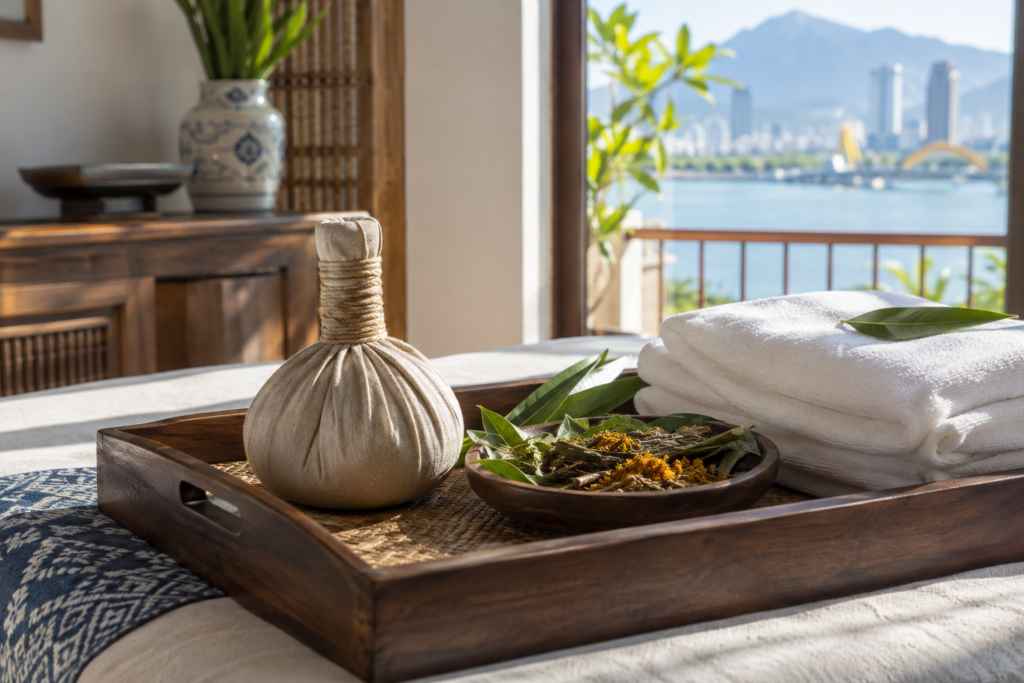
“Vietnamese massage” can describe different approaches depending on the provider, so the name alone does not tell you what a Da Nang session includes. Ask about the techniques, pressure, oil, stretching, duration and service location before deciding. This guide helps visitors and residents compare a relaxation session with their preferences, arrange an in-room appointment and understand when health concerns require professional advice. A massage can be a wellness experience; it should not be presented as a diagnosis or a guaranteed cure.
Quick answer: Ask the provider to explain the actual routine in plain language. Confirm pressure, products, privacy, appointment length, access permission and total cost; choose only techniques you are comfortable receiving.
💡 Tip: Confirm scent and pressure. ⚠️ Stop if the session causes pain or irritation. ✅ Verify the total cost and appointment details. 🔎 Ask for unclear terms in writing.
Vietnamese massage Da Nang: What to know
Is Vietnamese massage one fixed method?
No single routine is used by every provider under this label. A menu may combine traditional influences with oil massage, stretching or general relaxation techniques. Another provider may use the phrase differently. Ask what will happen during your session rather than assuming that “Vietnamese” guarantees specific movements, training or outcomes.
Home Spa Massage describes general full-body, foot, neck-and-shoulder, hot-stone and aromatherapy options for Da Nang, but confirm which techniques are currently available for your selected package. The Da Nang home spa page provides the current service overview, while the full-body massage guide describes the at-home format. Do not infer that every modality is included in every appointment.
Choose a session by your preferences
Begin with the experience you want. For quiet relaxation, say that you prefer a gentle approach. If you want one area emphasized, name it and specify any area to avoid. If you are interested in a traditional technique, ask the provider to describe it and whether it involves oil, stretching or a particular position.
| Question | Why it matters |
|---|---|
| Which techniques are included? | Clarifies what the service name means for this provider |
| Is oil or fragrance used? | Helps guests with scent or skin sensitivities |
| Does the session include stretching? | Lets you consent to each movement |
| What pressure can I request? | Sets a comfortable starting point |
| How is privacy maintained? | Establishes draping and personal boundaries |
| What is the total cost and duration? | Avoids confusion about setup or additional fees |
You can ask for a short explanation before booking and repeat preferences when the therapist arrives. If the description is vague, get clarification before confirming.
Pressure and communication
Pressure should be comfortable, and it can be adjusted at any point. Start gently if you are new to massage, tired after travel or unsure how your body will respond. Ask the therapist to check in before increasing pressure. Sharp pain, numbness, tingling or feeling unwell are reasons to pause or stop.
Avoid equating intensity with quality. A session should not require you to endure pain, and you do not have to accept stretching or movements you did not agree to. Say “lighter,” “please stop,” or “avoid this area” as soon as you need to. A professional provider should respect the request without pressure or argument.
At-home massage in Da Nang
At-home service can be arranged at a private residence or suitable accommodation if the provider serves the location and the property allows access. Prepare a clean, quiet room with adequate space and a clear entrance route. Ask what linens, oils and equipment are brought and whether you need to move furniture or provide a chair.
If you are staying in a hotel, resort or villa, confirm outside-provider rules with reception or management first. Give the service the property name, full address, map pin and entrance instructions. The existing hotel massage guide and apartment massage guide cover property logistics. A request is not confirmed until the provider replies with the agreed time and access plan.
Hygiene, privacy and product preferences
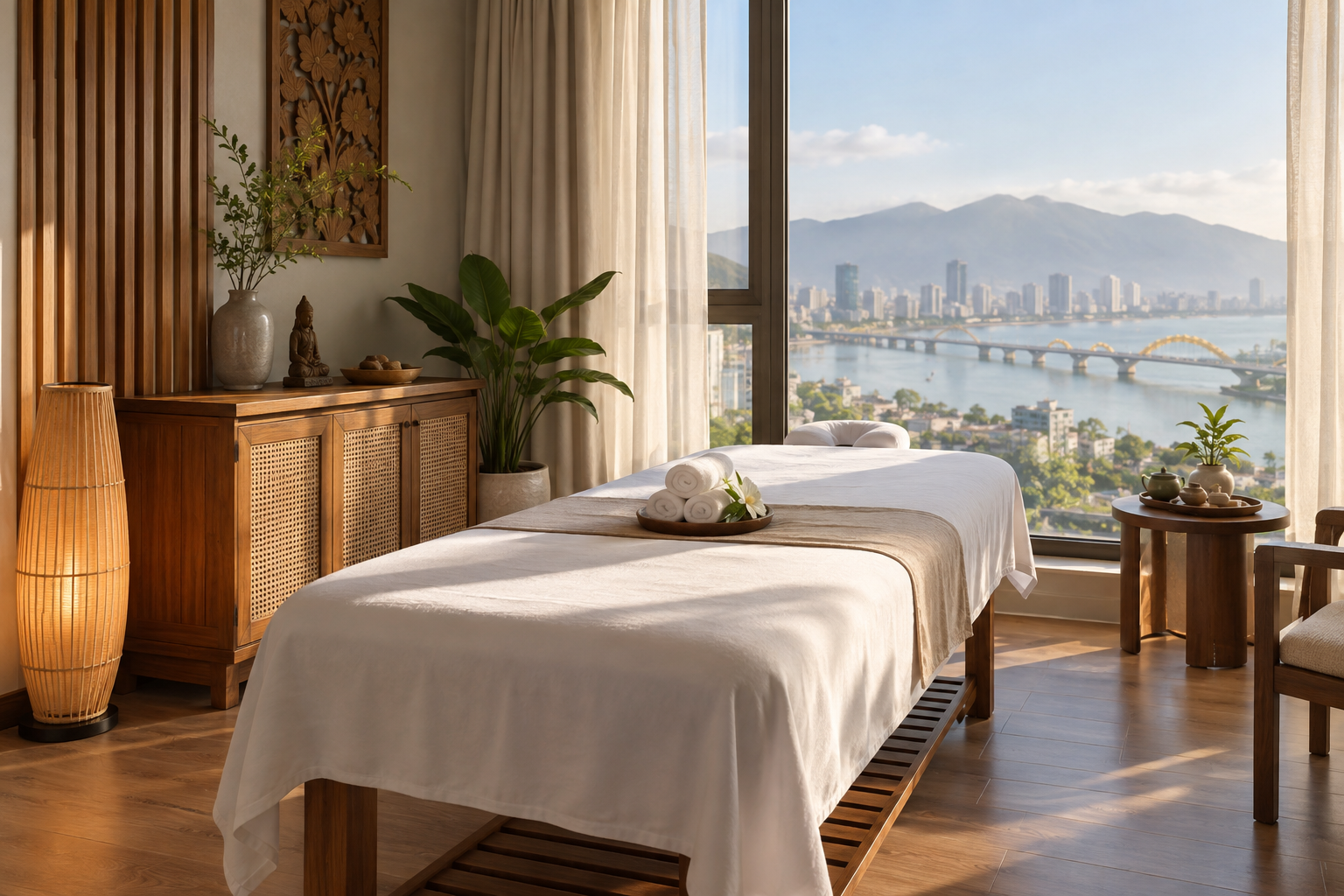
Ask whether clean linens are supplied for each guest and how reusable items are cleaned. If oil or fragrance is involved, ask which product will touch your skin and whether an unscented option is available. You can decline products or ask to stop their use.
Clarify how draping works and which areas are included. Keep valuables secure and choose a room where you feel comfortable. You may have another person present if you prefer; tell the provider in advance so they can confirm that the arrangement works.
For safety, agree on how you will communicate during the appointment. You can request a pause, change your position or end the session at any time. If the service deviates from the agreed scope, stop it and contact the booking provider.
Health considerations
Massage is not suitable for every condition. Avoid work over open wounds, active skin infections, recent injuries or areas with significant bruising. Tell the therapist about surgery, pregnancy, osteoporosis, a bleeding or circulation condition, nerve symptoms, easy bruising or medicines that affect bleeding. If uncertain, ask your doctor or midwife whether massage is appropriate and what technique should be avoided.
Healthdirect’s massage therapy guidance describes conditions that may make massage unsuitable or require medical advice. NCCIH also notes rare serious adverse effects and recommends discussing suitability with a healthcare provider when uncertain; see its overview. These sources provide general context, not personal diagnosis.
Do not delay medical care for severe, unexplained or worsening symptoms. A massage therapist should not diagnose a condition or promise to treat it. If you are seeking help for a medical problem, speak to a qualified clinician.
Confirm price and timing
Before the therapist travels, clarify session length, what the appointment includes, the total price, any travel or late-night fee and the cancellation process. The website lists a late-night surcharge after 23:00; ask for the current amount and confirm how it applies to your requested time. Ask whether setup counts toward the stated duration.
This is particularly useful for travelers with fixed checkout, dinner or flight plans. Include a buffer for traffic and property access. For two guests, ask how many therapists are needed and whether appointments occur simultaneously or one after another; do not assume a second therapist will be available without confirmation.
Booking checklist
Include these details in your first message:
- Date, preferred arrival time and an alternative time.
- Full address, accommodation name and access instructions.
- Guest count and requested session duration.
- The type of massage you are interested in and any focus area.
- Pressure, oil, scent and stretching preferences.
- Relevant allergy, injury, health condition or area to avoid.
- Request for the total cost and written booking confirmation.
This makes it easier for the provider to confirm whether the appointment matches your needs. Keep the final response so you can refer to the agreed service and arrival details.
FAQ: Frequently asked questions
What techniques are part of Vietnamese massage in Da Nang?
The phrase is not standardized across providers. Ask which techniques are included, whether there is oil or stretching and which areas will be covered.
Is Vietnamese massage always firm?
No. Pressure depends on the provider and your preference. Ask to start gently and request changes whenever needed.
Can I book the service at a hotel or villa?
Possibly, depending on the property’s rules and current provider coverage. Ask management about outside visits and confirm the access plan with the service.
Does traditional massage treat pain?
Do not assume a relaxation service will treat a medical condition. Evidence varies by symptom; seek medical advice for persistent or severe pain.
Can I ask the therapist not to stretch me?
Yes. Explain that before starting and repeat it if necessary. You can decline any movement and stop the session at any time.
What should a first-time guest choose?
Ask for a clear explanation, choose a comfortable pressure and consider a shorter session if you are unsure. Do not select a technique simply because it sounds more intense or “traditional.”
How to evaluate a provider’s explanation
A clear description should identify what a guest can expect, which steps are optional and how the therapist adapts pressure. If the explanation uses unfamiliar terms, ask for an example of what the therapist will do. You should understand whether the session involves oil, assisted movement, heat or a particular position before you agree.
Be cautious with claims that promise to remove toxins, reset organs or cure chronic conditions. Those claims are not necessary to describe a relaxing massage. Reliable health information separates a pleasant wellness experience from medical treatment, and a provider should not tell you to stop medication or ignore advice from your clinician.
Ask about practitioner experience without assuming credentials
You can ask how therapists are trained for the techniques included in a session and whether the provider can accommodate your preferences. Do not assume the term “traditional” proves a formal credential. If a health condition requires specialized care, ask your clinician to recommend an appropriately qualified practitioner rather than relying on a general relaxation service.
Set expectations for first-time guests
If this is your first massage in Vietnam, say so and request a plain-language explanation before each new technique. Start with gentle pressure and ask whether you can remain clothed or covered. Tell the therapist if you prefer not to have oil, stretching, hot stones or particular areas included. You do not need to try every modality listed on a menu.
It can help to decide boundaries in advance: areas you do not want touched, pressure level, whether you want conversation or quiet, and whether another person should stay nearby. These preferences are personal. A professional should not frame a boundary as a problem or persuade you to change it.
Language and communication
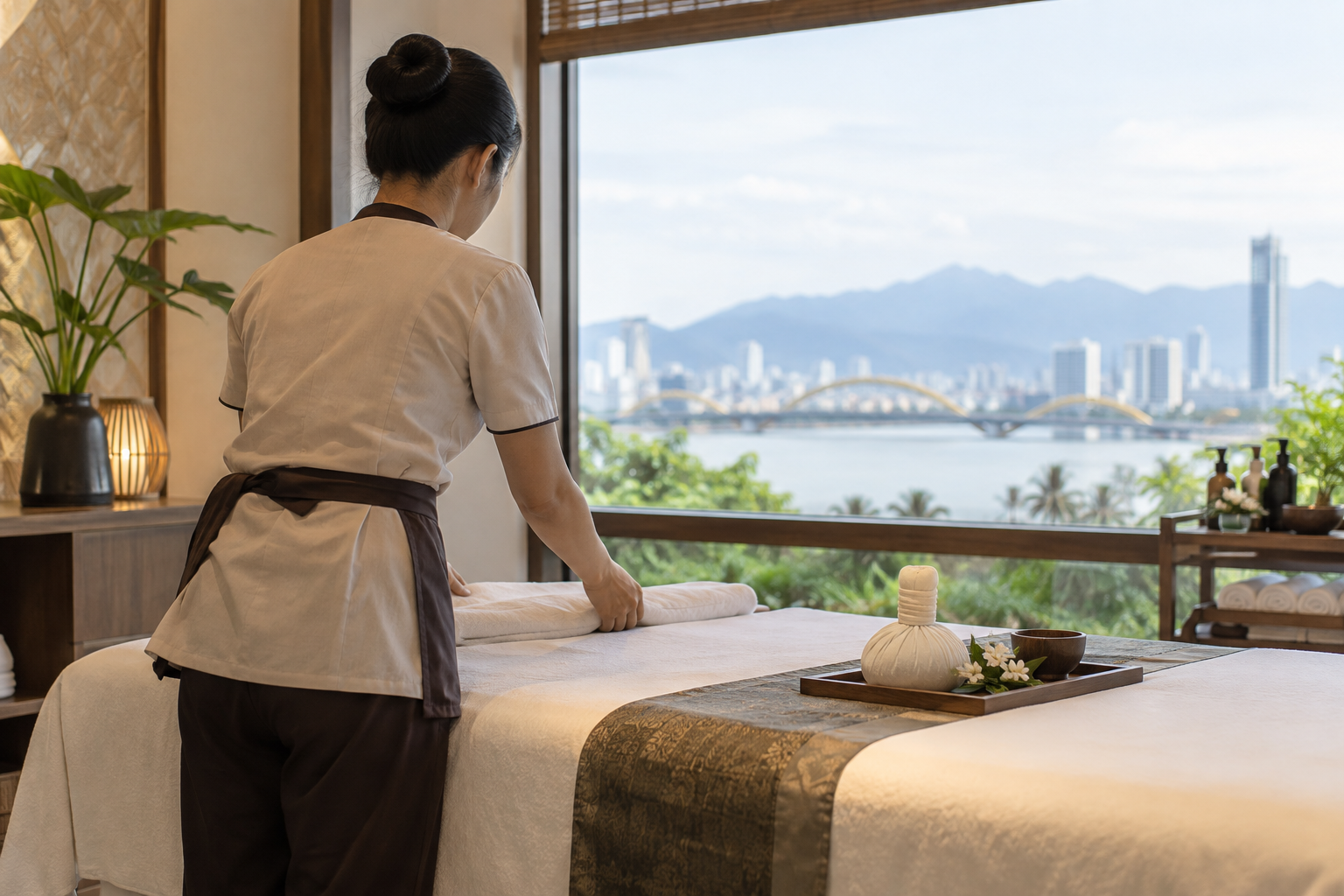
International guests may not share a first language with a therapist. Before booking, ask how you can communicate changes in pressure or stop the session. Simple words such as “lighter,” “pause” and “stop,” combined with a clear hand signal, may help, but agree on a method that both people understand. A booking contact who can clarify service details beforehand can reduce confusion on arrival.
For hotel or resort service, send the property name and lobby instructions in writing. If you need a translator or a companion present, mention this before the session so the provider can confirm the arrangement. Avoid assuming that a guest’s silence means consent; the therapist should check in and respond to feedback.
Choosing between a mobile service and a spa visit
An at-home appointment may be convenient when you want to stay in your accommodation, but it depends on room space, property access and the provider’s schedule. A fixed-location spa may offer a dedicated treatment area or facilities that are not available in a hotel room. Compare the practical conditions rather than assuming one format is always more professional.
At home, prepare a private, clean space and confirm what equipment the therapist brings. At a spa, ask about changing arrangements, privacy and what is included in the price. In either setting, clarify the technique, pressure, product and duration before agreeing.
Follow up thoughtfully
After the appointment, reflect on the specific parts that worked for you: pressure, product, position, communication and session length. Use that feedback if you book again. If the session caused persistent pain, a skin reaction or another concerning symptom, contact a healthcare professional and avoid repeating the technique until you receive advice.
Do not treat a positive relaxation experience as proof that a health condition has improved. If you are monitoring a diagnosed problem, follow your clinician’s assessment and care plan. Massage can be a personal wellness choice, while medical outcomes require appropriate evidence and professional evaluation.
Select the experience you actually want
Vietnamese massage Da Nang can mean different routines, so the best choice comes from an informed conversation rather than the label alone. Confirm techniques, pressure, products, privacy, access and price; disclose relevant health concerns; and seek clinical advice when symptoms need assessment. For a home or accommodation appointment, contact Home Spa Massage with your location and preferences, then wait for a complete confirmation.